

A packaging project can look straightforward on the artwork side and stall the moment quantities enter the conversation. A buyer asks for unit cost at a first-run volume, and the reply comes back with a minimum attached. That number was rarely part of the marketing plan.
Minimum order quantity, or MOQ, is one of the first constraints that shapes a paper tube project, and it is also one of the most misunderstood. It is seldom a single figure, it is not arbitrary, and it can often be negotiated within limits that depend on how the tube is built and how it is decorated.
This guide explains what MOQ means in custom paper tube manufacturing, which specifications drive it, and how packaging buyers can plan around it instead of running into it late.
MOQ Is a Property of the Order, Not the Supplier
Buyers often ask for "the MOQ" as though a factory publishes one number for everything it makes. In practice, the same supplier will quote very different minimums for two projects in the same week. A plain single-piece tube in a standard diameter is a short, simple run. A telescopic tube with a foil-stamped logo, a fitted insert, and a custom closure involves tooling, two production stages, and a fit test before anything ships.
The minimum is the point at which the job can run without the supplier losing money on setup. It reflects machine changeover time, material purchasing increments, die or plate fabrication, startup waste, and the inspection cost of a short batch. When a quote states a minimum, the useful follow-up question is not "can you lower it" but "which component set that floor."
The Two Minimums Hiding Behind One Quote
Almost every custom paper tube order carries two separate minimums: the structural minimum and the decorating minimum. The order minimum you are quoted is normally the higher of the two, not the average.
| Component | What Sets Its Minimum | Practical Lever |
|---|---|---|
| Tube structure | Winding setup and mandrel change | Use a standard diameter |
| Printing | Plate making and press setup | Digital for short runs |
| Foil or embossing | Die fabrication and second pass | Reuse one die across SKUs |
| Custom closure | New tooling plus fit validation | Choose a catalog closure |
| Fitted insert | Cutting die or molding setup | Die-cut board insert |
| Specialty board or liner | Mill purchasing increment | Standard stock grade |
This is why a project can meet a structural minimum easily and still miss the order minimum by a wide margin. Understanding which line item is setting the floor tells you which specification is worth revisiting.
How the Printing Method Sets the Print Minimum
Printing is usually the component that lifts a minimum, because plates and press setup are fixed costs spread across the run. The two methods buyers compare most often sit at opposite ends of that equation.
| Method | Run Band Commonly Quoted | Best Fit |
|---|---|---|
| Digital | Low hundreds and up | Trials and short runs |
| Offset | Low thousands and up | Long runs and fine graphics |
| Screen or flexo | Mid hundreds and up | Bold solid colors |
Treat these as planning bands rather than quotations, because the actual figure depends on the supplier's equipment, the number of colors, and whether the artwork suits the process. Neither method is universally better. Digital keeps a first run small but raises unit cost; offset lowers unit cost but only spreads setup across a large run. Artwork also has to suit the choice, which is a point covered in more detail in our guide to designing custom paper tube packaging.

What Pushes a Minimum Up: Tooling, Dies, and Material Runs
Three categories of specification account for most of the difference between a low minimum and a high one.
Cutting Dies, Foil Dies, and Embossing Tools
Any decoration that requires a shaped tool adds a fixed cost that the run has to absorb. Foil stamping, embossing, debossing, and die-cut inserts all fall into this group. The tooling itself is usually a one-time charge, but the setup pass on press is not, which is why these finishes carry higher minimums even when the die already exists.
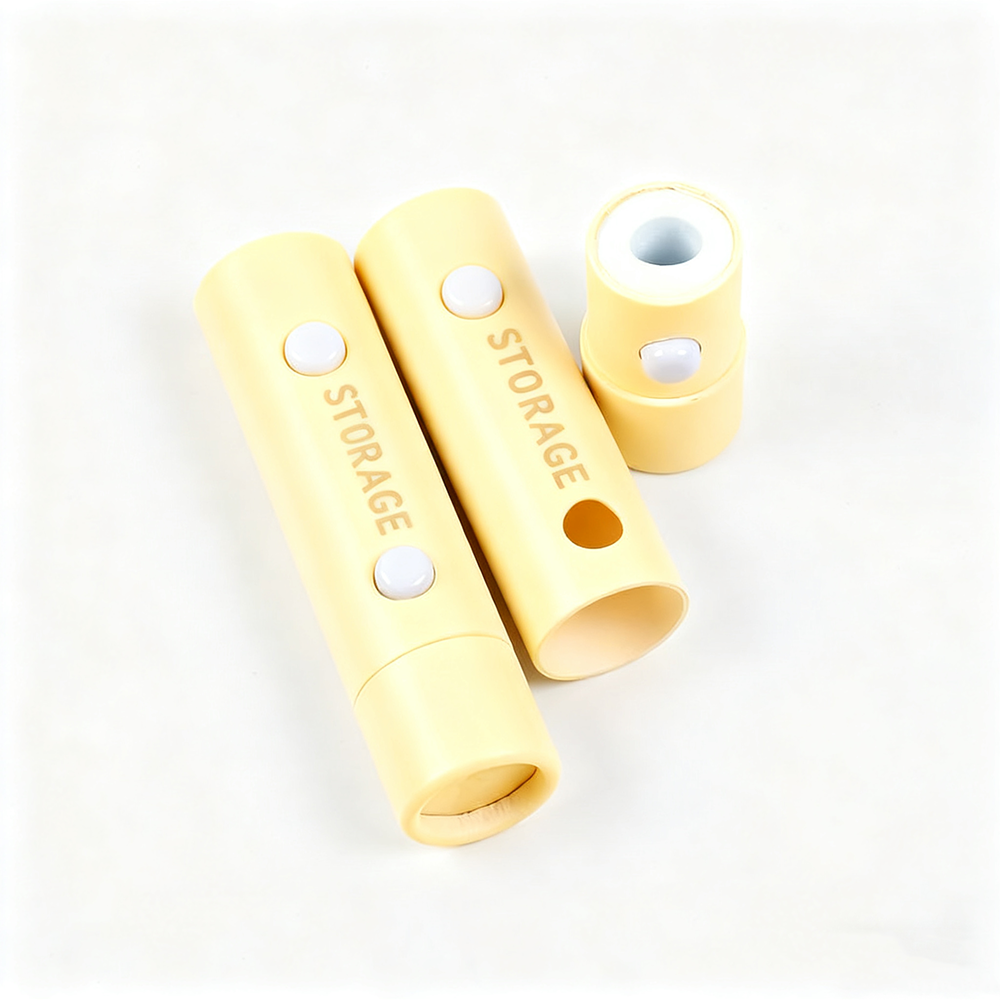
Custom Closures and Fitted Inserts
A closure that differs from the supplier's standard options requires tooling and, more importantly, fit validation across the actual diameter, wall thickness, and board grade being used. That testing work is the same whether you order 500 units or 50,000, which is why the minimum rises. Categories with additional closure requirements, such as child-resistant paper tubes, sit at the higher end because the mechanism has to be proven on the finished package rather than on a drawing.
Specialty Board Grades, Liners, and Mill Increments
Board and liner are purchased in mill increments. A common grade in a common thickness can be drawn from existing stock; an unusual color, weight, or barrier liner has to be bought in a full increment whether the order needs it or not. Where a project involves documented material requirements, the paperwork also has to match the grade actually used, which is one reason to confirm what is on file early, as outlined on our certifications page.
Why Factories Set Minimums at All
From a buyer's chair, a minimum can look like an obstacle. From the production floor it is a break-even calculation. Winding and printing both generate startup waste while the line reaches a stable condition, and that waste is a fixed quantity regardless of run length. Setup labor, machine occupancy, and quality inspection are also fixed. On a very short run those costs are spread across so few units that the work stops being viable.
This is worth keeping in mind when a supplier appears to have no minimum at all. The cost does not disappear; it moves into the unit rate, into a tooling line, or into a lower specification. A minimum that is explained clearly is generally a healthier signal than a minimum that is simply absent.
Typical Minimum Bands and What They Imply
| Project Profile | Relative Minimum | Main Driver |
|---|---|---|
| Unprinted standard tube | Lowest | Stock diameter and height |
| Printed tube, digital | Low | Setup absorbed per unit |
| Printed tube, offset | Moderate | Plate cost per color |
| Multi-component with foil | Higher | Die plus second decoration pass |
| Fully custom structure | Highest | New tooling and fit validation |
Use this as a planning frame rather than a price list. Two factories with different equipment will land on different figures for the same project, and a supplier who can explain where your project sits on this ladder is easier to work with than one who quotes a number without context.
How to Lower Your Minimum Without Damaging the Project
Most of the levers below reduce a minimum by removing a fixed cost rather than by asking for a favor. That distinction matters, because it keeps the project commercially sound for both sides.
- Start from a standard diameter. Choosing a size the factory already winds removes the mandrel change. Stock blank paper tubes are the lowest-friction starting point.
- Match the printing method to the run. A first run of a few hundred units belongs on digital, with offset reserved for the reorder once volume is proven.
- Reduce the color count. Every printed color adds plates and a press pass. One printed color over a colored board reads clearly and cuts the minimum.
- Reuse one structure across SKUs. Launching several products on the same tube size spreads the structural minimum across the range.
- Phase the launch. Confirm the two or three SKUs that matter first and add the rest on the reorder.
- Consider a plain tube with a printed label as an interim package if the launch date cannot move.
When a Higher Minimum Is the Better Decision
A low minimum is convenient; it is not automatically efficient. Setup cost is fixed, so unit cost falls as the run grows. A larger first order also produces a single production lot, which means one color standard and one dimensional batch rather than three deliveries from three separate setups. For products sold in sets, a larger run can carry several SKUs or colorways, which lowers the effective minimum per design below what the headline figure suggests.
The counterweight is inventory risk. The right volume is the one that covers a realistic sell-through period without leaving unsold packaging behind, and that is a financial question as much as a packaging one. The structure of how setup, tooling, and unit cost interact is broken down in the custom paper tube pricing guide.
How Minimums Interact With Sampling and Lead Time
A sample is not a production order, and the two are quoted separately. Most projects move through a structural proof, a plain sample to check dimensions and fit, and a printed sample to approve color and finish. Sample charges vary by supplier, and it is reasonable to ask whether the charge is credited against the production order.
Lead time also starts later than many first-time buyers expect. The clock begins after artwork approval and tooling confirmation, not at the inquiry stage. A minimum close to the supplier's threshold may be scheduled into a production gap, which can help or hurt delivery depending on the season, so it is worth asking how small orders are slotted.
Red Flags in MOQ Conversations
- A minimum with no explanation. A supplier who cannot say which component sets the floor is unlikely to manage the rest of the specification.
- Minimums quoted per color or per finish without disclosure. The order minimum should be stated once, clearly, as an order figure.
- Tooling charges that appear after the quote. Die, plate, and sample fees should be visible before you commit.
- A number that changes between quotation and purchase order without a change in specification.
- "No minimum" claims that ignore tooling. Ask how the setup cost is recovered, and expect a straight answer.
These signals overlap with the broader criteria used to evaluate a supplier, which are set out in our guide to choosing a reliable custom paper tube manufacturer.
Questions to Ask Before Accepting a Minimum
A short set of questions resolves most of the uncertainty in an MOQ discussion, and the answers belong in writing before the purchase order is issued.
| Question | Why It Matters |
|---|---|
| Which component sets this minimum? | Shows which spec to revisit |
| Is it per design, per color, or per order? | Changes how SKUs are planned |
| Are tooling and plate fees separate? | Prevents late cost surprises |
| What applies on the reorder? | Repeat minimums are usually lower |
| Is the sample charge credited? | Affects true launch cost |
| Which tolerances hold at this volume? | Small runs still need specification |
Frequently Asked Questions
What is the MOQ for custom paper tubes?
There is no single figure. It depends on the tube structure, the printing method, the finishes, and whether new tooling is required, so it is quoted per project.
Can custom paper tubes be ordered in small quantities?
Yes, within limits. Digital printing, standard diameters, and a low color count keep first runs small. Unprinted tubes have the lowest minimum of all.
Does the minimum change if only one color is printed?
Usually it falls. Each printed color adds a plate and a press pass, so reducing colors reduces the fixed cost the run has to absorb.
Is the minimum the same for printed and unprinted tubes?
No. Unprinted tubes skip plate making and press setup entirely, so their minimum is typically the lowest available on a given structure.
Do tooling costs count toward the minimum quantity?
No. Tooling, plates, and sample charges are separate fixed costs. The minimum refers to finished packaging units, not to money spent on setup.
Can the minimum be reduced on a reorder?
Often, yes. Once dies and plates exist and the specification is approved, the remaining fixed cost is smaller, so repeat minimums are frequently lower than the first order.
Planning Around MOQ From the Start
MOQ is a design constraint as much as a commercial one. Diameter, structure, color count, and finish selection all move the number, which means most minimums are decided long before a quotation is requested. Buyers who raise the question at the concept stage keep their options open; buyers who raise it after artwork is approved usually end up changing the design instead.
The practical order of operations is to fix the product, confirm the structure and diameter, choose the printing method against the expected volume, then add finishes only where they earn their cost. Structural decisions also carry the protection requirements of the product, which is where the specification should start, and the balance between protection, branding, and material choice is covered in our guide to custom paper tubes for product protection.
Need an Exact Minimum for Your Project?
Send us your tube size, print requirement, and expected first-run volume. Our team will confirm which specification is setting the minimum, quote the setup costs separately, and recommend a structure that fits your launch plan.