
Price, quality, and lead time have long been the three criteria packaging buyers work with. Since 12 August 2026, a fourth has been added by law in the European Union. The Packaging and Packaging Waste Regulation (PPWR, Regulation (EU) 2025/40) now applies directly in every member state, and it changes what brands must ask for — and what suppliers must be able to prove — before a paper tube can be placed on the EU market.
This guide explains what the regulation requires from recyclable paper tube packaging, which purchasing decisions now affect compliance, and what documents belong in your request for quotation. It is written from a manufacturing perspective for brand owners, packaging buyers, and product developers. It is not legal advice; regulatory conclusions rest with your brand and its compliance advisors.
What Changed for Packaging Buyers on 12 August 2026
The PPWR replaced the Packaging Directive 94/62/EC with a directly applicable regulation. There is no national transposition and no phase-in per country: one set of rules applies across the EU. For buyers, the practical shift is that compliance data has moved from a nice-to-have attachment to a market-access requirement. Packaging without the required documentation can be blocked at customs, delisted by retailers, or withdrawn from online platforms.
The regulation covers all packaging placed on the EU market regardless of category — cosmetics, food, supplements, gifts, and the shipping packaging around them. Paper tubes are squarely in scope, and because they are often sold as the primary pack rather than discarded transit packaging, the obligations apply to them in full.
The Four PPWR Requirements That Reach Paper Tubes
| Requirement | What it means for a paper tube |
|---|---|
| Substance limits | Heavy metals capped; PFAS restricted in food-contact packaging |
| Recyclability | Design-for-recycling grades phase in from 2030 |
| Documentation | Declaration of Conformity required before market placement |
| Labelling | Harmonised material labelling and digital identifiers phase in |
Two of these — substance limits and documentation — are already binding. Recyclability grades and harmonised labelling phase in over the coming years, but the design decisions that determine them are made now, on the tooling you commission this year. That asymmetry is what makes PPWR a purchasing issue rather than a distant deadline.
The Declaration of Conformity Is Now a Purchasing Document
From 12 August 2026, packaging may not be placed on the EU market without a valid Declaration of Conformity (DoC) covering the applicable requirements. The DoC is issued by the packaging manufacturer, but the obligation does not stop there. Suppliers of packaging materials must pass conformity information up the chain, importers must verify that the assessment exists, and where the packaging carries your brand name, the compliance responsibility sits with your company — not with a supplier you can no longer reach.
The purchasing consequence is simple: DoC readiness is a go/no-go criterion in supplier qualification, and it should be requested at the RFQ stage rather than after the purchase order. A manufacturer who cannot explain which tests support the declaration, or who promises documents "before shipment", is signalling that compliance was never part of their production planning.
How Recyclability Is Graded — and Where Paper Tubes Win or Lose Points
The PPWR grades packaging by recyclability and phases in minimum grades: from 2030, packaging placed on the EU market must reach at least the grade corresponding to roughly 70% recyclability by design; stricter thresholds follow at the end of the decade. The grade is determined by design — materials, layers, and how separable the components are — not by what the label says.
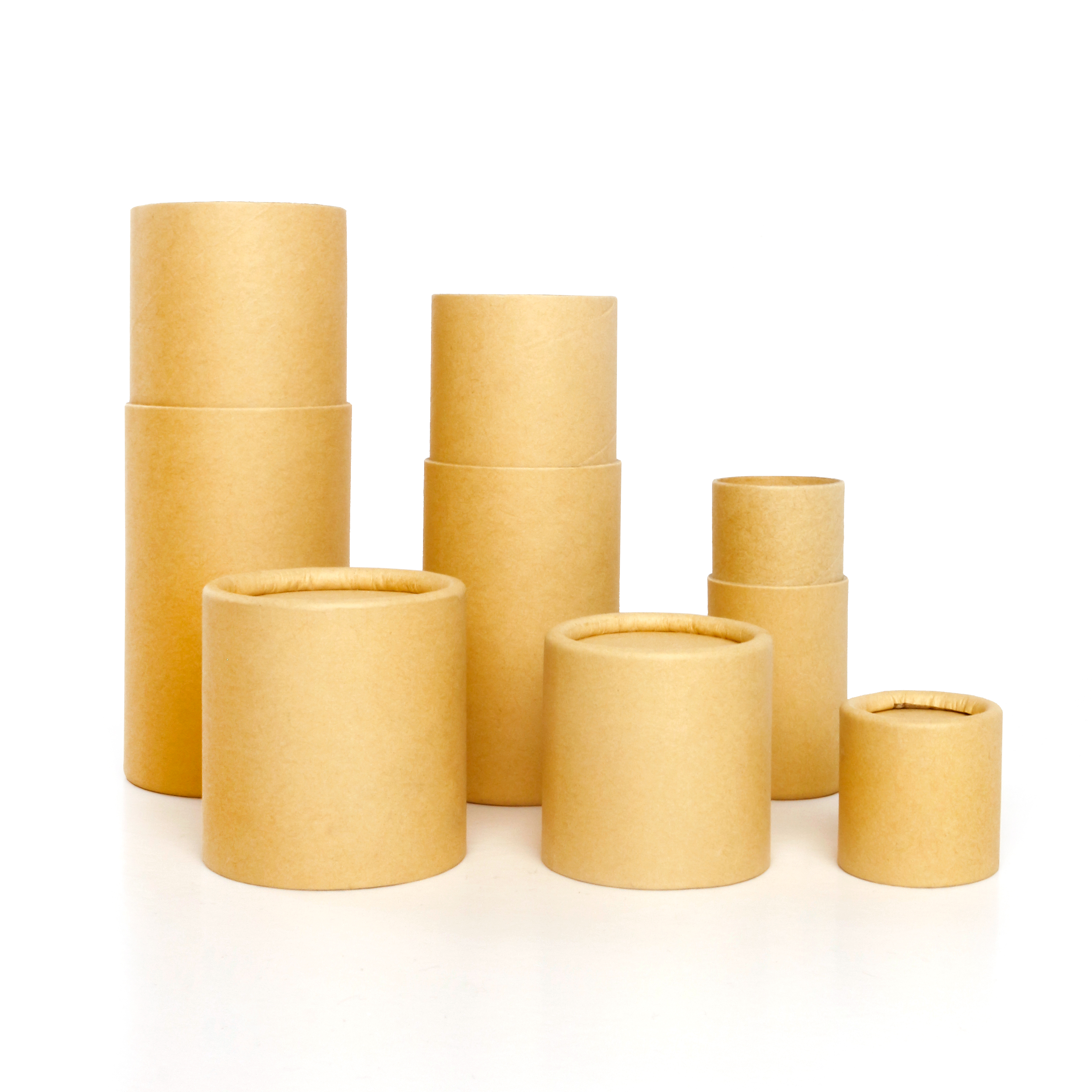
Paper tubes start from a strong position: a wound-paper body with a paperboard closure is essentially a single-material pack that existing paper recycling streams handle well. The score erodes through additions. Thick plastic liners, aluminium barrier foils bonded to the body, metal bottoms, and PVC windows each push the design toward composite territory, where the packaging is assessed by stricter rules and can fall out of the paper stream entirely. This is also why the mono-material versus composite distinction matters: it changes both the testing scope and the recyclability assessment.
None of this means barrier performance must be sacrificed. It means the barrier must be chosen deliberately — as a separable inner bag, a thin functional coating, or a liner specified at minimum weight — and recorded as a design decision. Our overview of barrier technology for food-grade paper tubes covers the options in detail.
Design Decisions That Move a Tube Up or Down a Grade
Barrier liners
Keep the protective layer separable where the product allows it. A removable inner bag keeps the tube in the paper stream; a permanently bonded multilayer laminate does not.
Coatings and inks
Water-based coatings and standard printing inks are broadly compatible with paper repulping. Heavy varnish stacks and plastic-film laminates work against the grade.
Closures and metal parts
Paperboard closures preserve the mono-material story. Metal caps and bottoms are not disqualifying, but they are separable components and should be declared as such.
Labels and decoration
Paper labels with removable adhesives are neutral. Full-body plastic sleeves and non-separable foils are not. Decoration should be reviewed with recyclability in mind at the artwork stage, not retrofitted.
The PFAS Question for Food-Contact Applications
Food-contact packaging faces a stricter substance regime, and PFAS — the fluorinated compounds historically used in grease- and moisture-resistant paper treatments — are the headline item. For buyers, the practical risk sits in invisible inputs: fluorochemical treatments on the board, certain barrier coatings, and unverified recycled fibre.
A tube is not compliant simply because it is unlined, and not non-compliant simply because it is a composite. What matters is test evidence covering the actual materials — board, liner, adhesive, and ink — in the finished construction. Ask specifically whether any fluorinated treatment is present, and require the declaration in writing rather than accepting "food grade" as an answer. Food-grade and PFAS-free are different claims, and only one of them addresses the question.
Heavy Metals: Ink, Adhesive, and Recycled Fibre
The total-content limits on lead, cadmium, mercury, and hexavalent chromium are not new in spirit — they carry forward a long-standing requirement — but enforcement is now uniform, and the recurring failure points are well known: pigmented inks, certain adhesives, and low-grade recycled board of unknown origin. None of these are exotic inputs. They are the ones a price-driven quote is most tempted to use.
For buyers, the useful question is not "are your tubes heavy-metal free" but "which laboratory tested which lot, and can the report be traced to my production run". Generic certificates that predate your order answer a different question.
What to Request From Your Supplier Now
| Document | Why it matters |
|---|---|
| Material composition declaration | Names board, liner, adhesive, ink per component |
| Heavy-metal test report | Accredited lab, traceable to the production lot |
| PFAS statement | Written confirmation for food-contact tubes |
| Recyclability assessment support | Construction data behind the design-for-recycling grade |
| DoC support file | Inputs the manufacturer needs to issue the declaration |
| Chain-of-custody certificate | FSC or equivalent, relevant to the next deadline below |
Requesting these at the RFQ stage does two things. It filters suppliers before tooling money is committed, and it gives your compliance team the raw material to build the product-level file EU rules expect. Our certifications page lists the documents we provide as standard.
Green Claims: What You Can Legally Print After 27 September
A second EU rule arrived weeks after the PPWR: the Empowering Consumers for the Green Transition Directive, which bans unsubstantiated environmental claims across the EU from 27 September 2026. For packaging, this moves statements like "recyclable", "plastic-free", and "eco-friendly" from marketing language into claims that need evidence behind them.
The link to sourcing is direct: the words printed on the tube are only as strong as the documentation in the file. A mono-material tube with a paperboard closure can support a recyclability claim with construction data; a laminated tube with a metal base cannot carry the same wording. Deciding the claim and the design together — before artwork is finalised — avoids reprinting packs that legal review later rejects. The broader sustainability context of paper tubes is covered in our product protection and sustainability guide.

EUDR: The Next Deadline on Fibre Sourcing
One more compliance window is already open. The EU Deforestation Regulation extends due-diligence duties to wood-derived products, with the first major deadlines for large operators at the end of December 2026. Its scope for packaging depends on how the pack is sold — packaging sold as a product in its own right is generally in scope, while packaging used solely to carry another product is typically not — and the boundary requires case-by-case assessment.
For paper tube buyers the practical takeaway is fibre traceability. Certified fibre with chain-of-custody documentation does not settle every legal question, but it is the foundation your advisors will ask for, and suppliers who already run certified supply will be far easier to work with as the deadline approaches.
A Compliance Scorecard for Supplier Evaluation
| Criterion | What good looks like |
|---|---|
| DoC readiness | Explains which tests support it, per construction |
| Material transparency | Declares every layer, coating, and adhesive |
| Test traceability | Reports link to your lot, not a generic sample |
| Recyclability fluency | Discusses grades and separability unprompted |
| Fibre documentation | Chain-of-custody certificates available on request |
| Claim discipline | Confirms wording before printing, not after |
Common Sourcing Mistakes Under the New Rules
- Treating compliance as the supplier's problem. The obligation follows the brand name on the pack, and suppliers provide inputs rather than absolution.
- Assuming "paper" settles recyclability. Liners, coatings, and metal parts decide the grade, and they must be assessed as a construction.
- Accepting undated or generic certificates. Evidence must trace to your production lot and construction, not a showroom sample.
- Printing claims before the file exists. Under the green-claims rules, an unsupported "recyclable" on the tube is itself a compliance exposure.
- Designing for today only. Tooling commissioned in 2026 will still exist when stricter grades phase in; cheap separability decisions now avoid redesign later.
- Leaving documents to the shipment stage. Testing and assessment take lead time; compressed schedules are how shipments get held.
Frequently Asked Questions
Are paper tubes automatically PPWR compliant?
No. Paper is a favourable starting material, but compliance depends on the full construction — liner, adhesive, ink, closure — and on documented test evidence plus a Declaration of Conformity.
Do recyclable paper tube packaging and biodegradable mean the same thing?
No. Recyclability describes whether the pack re-enters the material stream; biodegradability describes breakdown conditions. They are separate claims with separate evidence requirements.
Can a tube with an aluminium liner still be sold in the EU?
Generally yes, but it is assessed as composite packaging with stricter requirements. Structure and documentation should be confirmed with your supplier and compliance team early.
Who issues the Declaration of Conformity?
The packaging manufacturer issues it, but the brand carrying its name on the pack carries the responsibility. Verify it exists before placing products on the market.
Does the PPWR apply to non-food products?
Yes. Substance limits, recyclability, and documentation apply across categories; PFAS restrictions are an additional, stricter layer for food-contact applications.
What should I change first in my RFQ?
Add a documents clause: composition declaration, traceable test reports, PFAS statement, and DoC support file, all requested before the purchase order is confirmed.
Conclusion
The PPWR has not made sourcing harder so much as it has made shortcuts visible. A well-constructed paper tube — mono-material where possible, separable where not, documented from board to ink — clears the new bar with room to spare, and the process of proving it is now part of normal procurement. The buyers who adjust their RFQs, their supplier scorecards, and their artwork sign-off this year will treat compliance as a design input. The ones who do not will meet it as a customs delay.
If you are reviewing your packaging against the new requirements, our team can walk through your construction, share the documentation we provide, and flag the design decisions that affect recyclability before tooling is committed. You can also compare structural options in our custom paper tube packaging solutions guide or review cost drivers in the pricing guide.
Sourcing Paper Tubes for the EU Market?
Send us your product requirements and target market. Our packaging team will review the construction for recyclability, confirm the documentation we provide, and support your compliance file from sampling onward.