

Before launching a product, most brands compare packaging formats, and the choice between paper tubes and folding cartons comes up often. Folding cartons are widely used because they are lightweight, easy to store, flexible in printing, and suitable for many retail products. Paper tubes offer a different format built on rigid cylindrical construction, with a distinctive appearance, a strong branding surface, and premium presentation. Neither format is universally better. The right choice depends on product requirements, brand positioning, protection needs, packaging design, budget, and distribution model. This guide compares the two formats across the factors that matter to packaging buyers, so you can make a more informed decision for your specific product.
Paper Tube Packaging vs Folding Cartons: What Is the Difference?
Before comparing performance, it helps to define the two formats clearly. They both use paper-based materials, but their structure, production method, and behavior in the supply chain are quite different.
What Is Paper Tube Packaging?
Paper tube packaging is made by spiral-winding or convolute-winding layers of paperboard into a rigid cylindrical structure. The result is a three-dimensional container with its own structural strength, rather than a flat sheet that is folded around the product at the point of packing. Tubes can be produced in custom diameters, heights, and wall thicknesses, with closures ranging from friction-fit lids and metal ends to threaded and telescoping designs. The outer surface accepts full-color printing, foil stamping, embossing, and matte or gloss finishes. Common applications include tea, coffee, cosmetics, candles, supplements, and gift products.
What Are Folding Cartons?
Folding cartons are made from a single sheet of paperboard that is die-cut, creased, and folded into a box shape during the packaging process. They arrive at the packer flat, which makes them efficient to store and ship before use. Folding cartons are lightweight, offer a wide range of printing options on their flat panels, and are used across countless retail categories. Because the product is typically packed after the carton is erected, the format suits automated packing lines and high-volume production. The range of board grades, coatings, and structural designs available means folding cartons vary widely in performance and appearance.
Paper Tubes vs Folding Cartons: Key Differences
The following table summarizes how the two formats compare across the factors that matter most to packaging buyers. Neither format wins every category; each has strengths that suit different products and business models.
| Factor | Paper Tube Packaging | Folding Cartons |
|---|---|---|
| Structure | Rigid cylindrical format | Folded paperboard |
| Product protection | Strong resistance to crushing | Depends on board thickness and construction |
| Shelf differentiation | Distinctive shape | Familiar retail format |
| Branding surface | Large printable cylindrical surface | Multiple printable panels |
| Storage before assembly | Requires more space | Ships flat |
| Customization | Size, structure, closures, finishes | Size, shape, printing, finishes |
| Premium presentation | Strong | Depends heavily on design |
| Sustainability | Paper-based options available | Paper-based options available |
| Product suitability | Best for selected products | Suitable for many product categories |
| Cost considerations | Depends on structure and customization | Often efficient for high-volume simple packaging |
Which Packaging Provides Better Product Protection?
Structural protection is where the two formats diverge most clearly. Paper tubes are formed as rigid cylinders, and their walls can be built up with multiple layers to provide strong resistance to crushing and deformation during handling and shipping. For products that are heavy, fragile, or shipped over long distances, this inherent rigidity can reduce the need for additional inner packaging. Folding cartons are lightweight by design and gain their strength from the paperboard grade and the box construction used. They protect the product adequately in many cases, particularly when the product already has its own inner container, such as a bottle, jar, or pouch.
It would be misleading to say paper tubes are automatically stronger for every application. Real-world protection depends on product weight, fragility, shipping conditions, inner packaging, and the distribution environment. A lightweight cosmetic jar packed in a well-designed folding carton with a proper insert can ship perfectly safely, while a tube with an incorrectly specified wall thickness could be over-engineered for the same job. The practical approach is to define the protection requirements first, then match the packaging structure to them. For brands shipping premium or fragile products where product protection and branding need to work together, rigid paper tubes often provide a useful balance of crush resistance and presentation.
Which Packaging Is Better for Branding and Shelf Appeal?
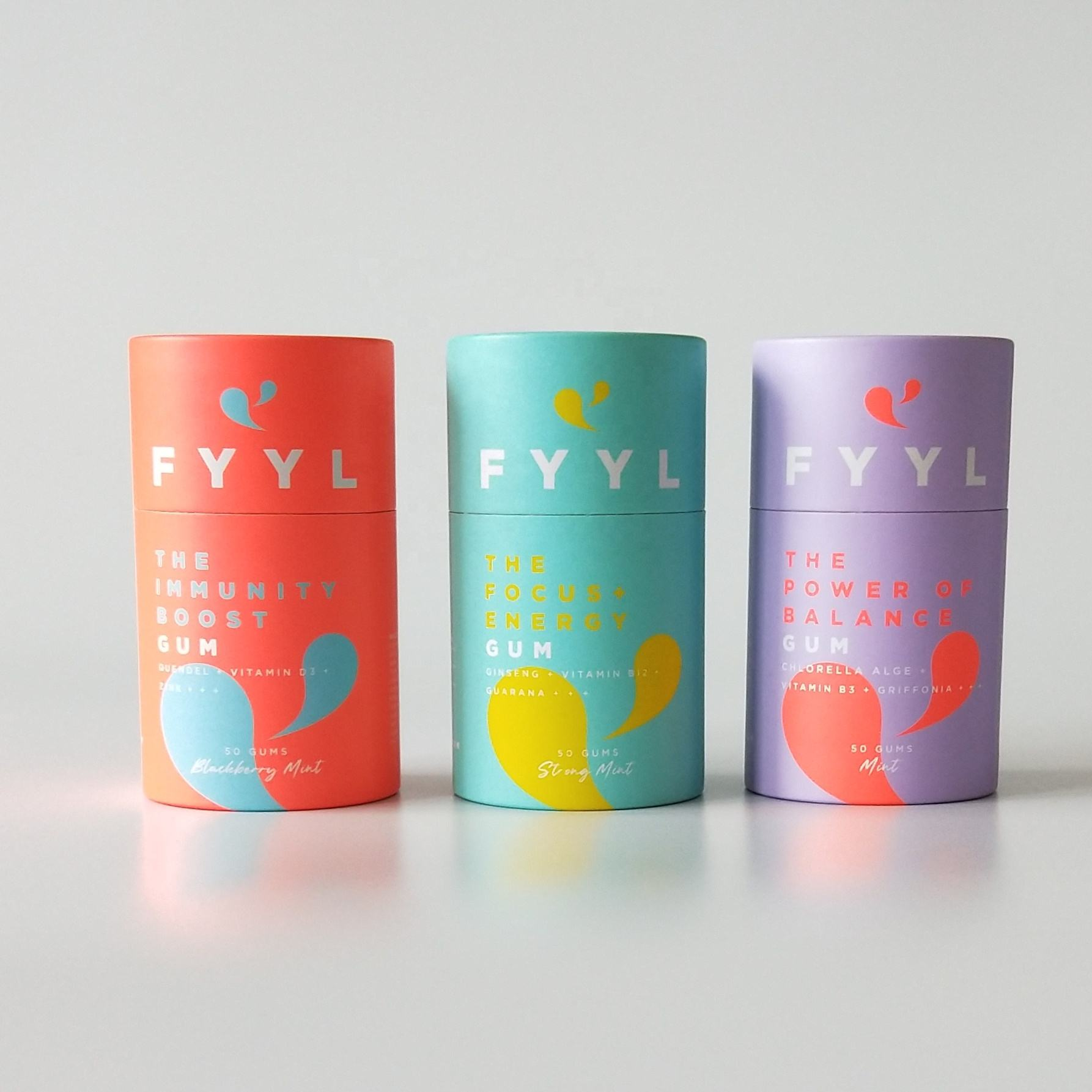
Brand presentation is one of the main reasons brands consider paper tubes at all. The cylindrical format stands apart from the rectangular boxes and pouches that dominate most shelves, and the continuous 360-degree printable surface gives the design team a single unbroken canvas for logos, color, and storytelling. A rigid tube also has a physical presence that lightweight cartons do not; it feels substantial in the hand, which supports premium positioning.
Folding cartons are no less capable on the graphics side. Their flat panels are ideal for high-quality printing, and the format is familiar to consumers, which can be an advantage for products where recognition matters more than novelty. Cartons also stack neatly and display efficiently in retail fixtures. The better choice depends on brand identity and product positioning. Brands that want to differentiate through shape, tactile feel, and unboxing experience tend to favor tubes; brands that want conventional, efficient shelf display often stay with cartons. The impact of premium finishing on either format is covered in more depth in our guide to luxury paper tube packaging for premium brands.
Which Option Offers More Customization?
Both formats offer extensive customization, but the types of customization differ. Paper tubes can be specified across diameter, height, wall thickness, closure style, printing, and finishing, with the ability to add foil stamping, embossing, matte or gloss coatings, and custom inner inserts. The structural range is the notable difference: a tube can be engineered with different wall constructions and closure mechanisms to suit the product and the opening experience.
Folding cartons offer their own broad set of options, including custom dimensions, die-cut shapes, window cutouts, a wide range of printing, coatings, embossing, and foil stamping. The differences matter most when a brand needs structural or functional features. A resealable threaded lid, a window panel, or a specific inner cradle are each easier to achieve in one format than the other. The right choice is driven by which custom features the product actually requires, rather than by the raw number of options available.
Paper Tubes vs Folding Cartons for Sustainability
Sustainability comparisons between paper tubes and folding cartons are often oversimplified, so it is worth being precise. Both formats can be produced from paper-based materials, and both can support sustainability goals when appropriate paper-based materials and recyclable constructions are selected. The actual environmental performance depends on material composition, coatings, laminations, adhesives, and the local recycling infrastructure where the packaging ends up.
Claims like "paper tubes are always more sustainable" or "paper tubes are 100% recyclable" should be treated with caution, because they depend entirely on how the specific package is constructed. What can be said fairly is that paper-based packaging of either format can help brands reduce reliance on plastic in certain applications, which is a meaningful consideration for many buyers. When evaluating options, ask each supplier for details on material sourcing, coatings, and end-of-life guidance, and compare like for like.

Which Packaging Is More Cost-Effective?
Cost comparisons depend heavily on the specification, so it is more useful to compare cost drivers than to quote figures. For paper tubes, the main drivers are tube size, wall thickness, closure type, printing, finishing, inserts, order quantity, and the level of structural customization. For folding cartons, the drivers are paperboard grade, dimensions, die-cutting, printing, finishing, special structures, and order quantity.
As a general pattern, a folding carton is often the more cost-efficient option for simple, high-volume packaging where the product has its own inner protection and the box is a relatively straightforward outer layer. A paper tube can deliver greater value when premium presentation matters, product protection is a real requirement, brand differentiation is a priority, or the packaging itself is part of the customer experience. For a detailed look at how tube specifications affect pricing, see our complete custom paper tube cost guide.
Which Packaging Is Better for Different Products?
Product type is often the fastest way to narrow the decision. The recommendations below are practical starting points, not hard rules, because individual brand goals and logistics matter too.
Tea and Coffee
Specialty tea, premium coffee, and gift collections are strong candidates for paper tubes. The rigid structure protects loose leaf and ground product, resealable closures help maintain freshness, and the format signals quality before the consumer opens it. Folding cartons remain a common and cost-effective choice for standard retail lines.
Cosmetics and Beauty
Cosmetics and beauty brands often choose paper tubes for their premium appearance, brand differentiation, and gift-ready presentation. The cylindrical canvas works well for strong visual identities, and custom inserts can hold bottles, jars, and lip care products securely.
Candles and Home Fragrance
Candles benefit from the combination of product protection and luxury presentation that tubes provide. The rigid wall guards glass vessels during transit, while seasonal collections and gift packaging gain a distinctive premium look that cartons find harder to match.
Supplements and Wellness Products
Supplements and wellness brands use paper tubes to reinforce premium positioning and carry detailed branding, while meeting product-specific protection requirements. The format also supports options such as child-resistant closures where regulations require them.
Mass-Market Products
For mass-market products, folding cartons are often the more practical choice. They are lightweight, ship flat, suit high-volume efficiency, and work well when the product already has sufficient inner protection. Choosing cartons here is a sound commercial decision, not a compromise.
Paper Tubes or Folding Cartons: Which Should Your Brand Choose?
A practical decision framework can replace guesswork. Paper tubes are worth serious consideration when premium presentation is important, product differentiation is a priority, rigid structural protection is useful, the packaging is part of the customer experience, or a distinctive format supports the brand. Folding cartons may be the better fit when flat storage is important, shipping efficiency is a priority, simple retail packaging is sufficient, large-volume cost efficiency is critical, or the product already has adequate inner protection.
Some brands find that the two formats complement each other. A product can launch in a folding carton for the standard retail channel while a premium edition uses a custom paper tube for gifting and e-commerce. Mixing formats by product line is common and can be a sensible way to balance cost and brand experience. For a broader view of how custom paper tube packaging supports modern consumer brands, our solutions article walks through the strategic considerations.
How to Choose the Right Paper Tube Packaging Manufacturer
If the comparison points toward paper tubes, the next step is selecting a manufacturer with the right capabilities. Look for genuine customization capability across dimensions and structures, a real range of material options, solid printing and finishing expertise, sample development before production tooling, quality control at defined checkpoints, production consistency across batches, and support for bulk orders. Our guide to choosing a reliable custom paper tube manufacturer covers these criteria in detail.
FAQ
Are paper tubes better than folding cartons?
Neither format is universally better. The right choice depends on the product, brand positioning, protection needs, budget, and logistics. Paper tubes offer distinctive structure and strong crush resistance, while folding cartons are lightweight, ship flat, and suit high-volume retail.
Are paper tubes more expensive than folding cartons?
Not necessarily. Cost depends on size, materials, customization, order quantity, and structure. A simple, high-volume folding carton is often cost-efficient, while a paper tube with premium finishing and custom closures carries different cost drivers that may or may not exceed a comparable carton.
Which packaging provides better product protection?
Rigid paper tubes can provide strong crushing resistance because of their layered cylindrical walls. Actual performance depends on the specific construction and the product's protection requirements. Folding cartons protect adequately in many cases, especially when the product has its own inner container.
Are paper tubes more sustainable than folding cartons?
Both formats can be produced from paper-based materials. Environmental performance depends on material composition, coatings, laminations, adhesives, and local recycling systems, so the answer varies by specific product and region rather than by format alone.
Which packaging is better for premium products?
Paper tubes are a strong choice for premium products because of their distinctive shape, tactile feel, and rigid presence. Premium folding cartons can also deliver excellent presentation through design, printing, and finishing, so the best option depends on the brand and product experience you want to create.
Can folding cartons and paper tubes be used together?
Yes. Many brands use folding cartons for standard retail lines and paper tubes for premium editions, gifting, and e-commerce. Combination packaging can be a practical way to balance cost efficiency with brand differentiation.
Conclusion
The right packaging format depends on the product, brand positioning, protection requirements, logistics, and budget. Paper tubes may be the stronger choice when a brand prioritizes distinctive presentation, rigid protection, premium customer experience, and custom structural design. Folding cartons may be more suitable when a brand prioritizes flat shipping and storage, lightweight packaging, high-volume efficiency, and conventional retail formats.
Rather than asking which format is better in general, the more useful question is which format fits this product, this brand, and this route to market. Both can deliver excellent results when specified correctly.
Not sure whether paper tube packaging is right for your product?
Contact EcoPaperTubes to discuss your product requirements, packaging goals, and customization options with our packaging team.
View Product Range Request a Quote