
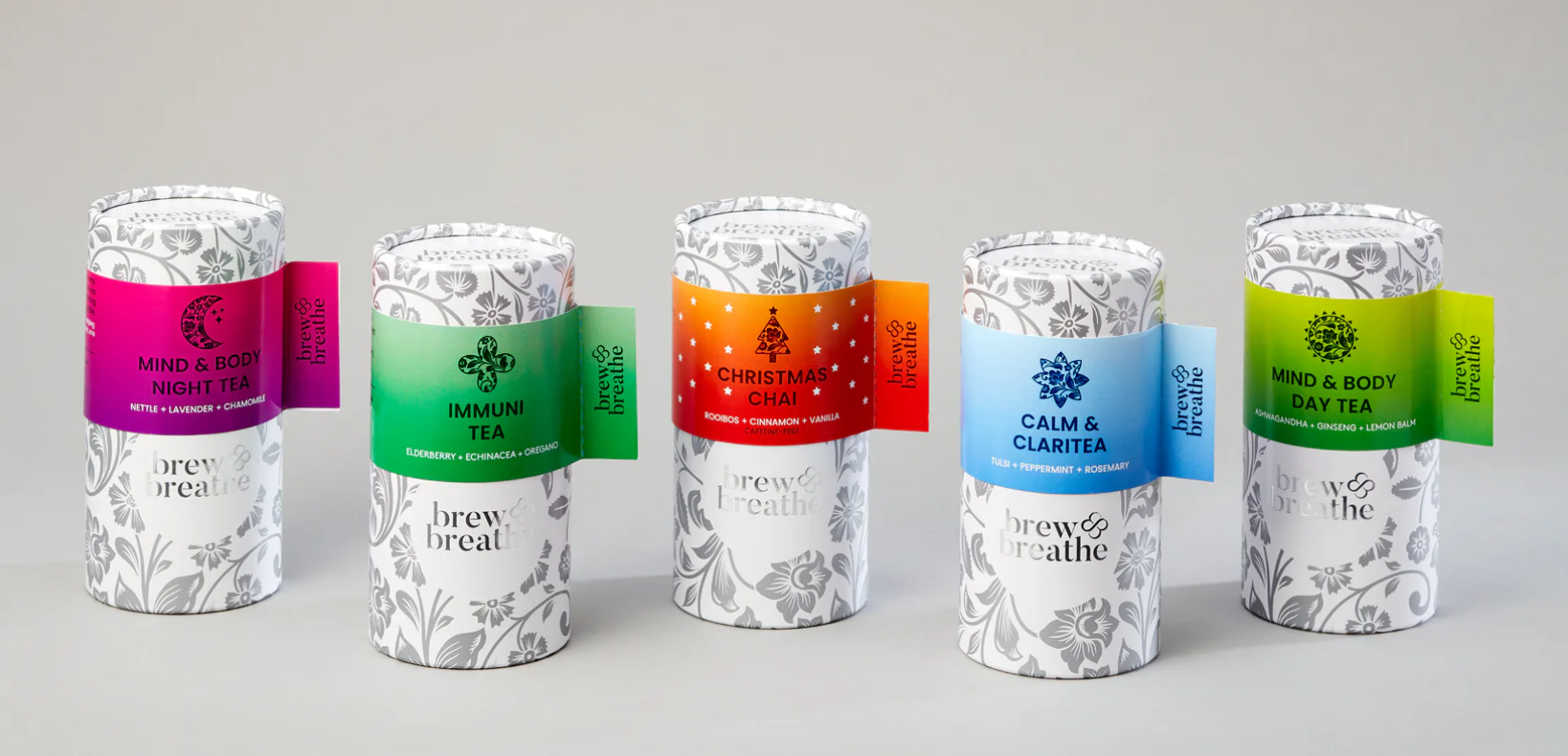
Every product tells a story before a customer even opens it. The vessel that holds your product is the first physical interaction a buyer has with your brand, shaping expectations around quality, value, and identity. For premium products ranging from artisanal tea to luxury skincare, two packaging contenders dominate the conversation: paper canisters (cylindrical composite tubes) and traditional rigid boxes (set-up boxes with chipboard cores).
Both formats deliver a high-end feel, but they excel in different scenarios. This comparison breaks down the seven dimensions that matter most when choosing between them: construction, protection, branding, sustainability, logistics, consumer experience, and industry fit.
Understanding the Two Packaging Formats
Paper Canisters
Cylindrical tubes manufactured by spiral-winding or convolute-winding multiple layers of paperboard and kraft paper around a mandrel. The construction typically includes a structural core layer, a printed outer wrap, and an optional inner liner (foil, greaseproof paper, or barrier coating). Ends are closed with metal or plastic ends, plug caps, or threaded closures. Common diameters range from 30mm to 150mm, with heights from 50mm to 350mm.
Traditional Rigid Boxes
Rectangular or square boxes with a thick chipboard (greyboard) core, typically 1-3mm in thickness, wrapped in printed paper, specialty stock, or fabric. The construction uses a hinged or telescoping lid design with a separate base tray. The wrapping material is glued to the chipboard panels, which are then assembled into the final box. Standard formats include two-piece telescoping, hinged lid, shoulder boxes, and drawer-style slide boxes.
Shape and Form Factor: Cylinder vs Rectangle
The most obvious difference also carries the deepest implications for how a product is perceived and used.
Paper canisters own the cylindrical form. This shape is inherently tactile and invites rotation, making them ideal for products meant to be handled and explored. The round cross-section distributes pressure evenly and resists crushing from all directions, a structural advantage that rectangular packaging cannot replicate without reinforced corners. Cylinders also stand upright naturally, creating strong shelf presence and making them easy to grab from above, which is why the format dominates in tea, coffee, and supplement categories where consumers reach for products frequently.
Rigid boxes leverage flat, defined planes that act as natural canvases for large-scale artwork and typography. The rectangular format aligns with retail shelving systems, maximizing space efficiency in standard displays. The flat lid offers an uninterrupted surface for embossing, foil stamping, and intricate multi-color designs that read clearly from a distance. For gift-oriented categories like fragrance, jewelry, and premium confectionery, the rigid box delivers a ceremonial unveiling moment that cylindrical packaging struggles to match.
| Dimension | Paper Canisters | Rigid Boxes |
|---|---|---|
| Shelf footprint | Compact, upright, vertical stacking possible | Wider footprint, stable horizontal stacking |
| 360-degree branding | Natural: one continuous printing surface | Limited: separate panels with visual seams |
| Shape versatility | Fixed cylinder (round, oval possible) | Any rectangular proportion; custom die-cut shapes |
| Product access | Top-down reach-in, easy frequent access | Lid-off reveal, slower but more ceremonial |
Material Construction and Structural Integrity
Paper canisters are engineered for hoop strength. The spiral winding process creates continuous fiber alignment around the circumference, producing a tube that resists radial compression exceptionally well. Multi-layer construction allows manufacturers to tune wall thickness from 0.5mm to over 5mm by adding kraft paper plies, with each additional layer increasing crush resistance. The metal or plastic ends provide rigid sealing surfaces that protect the contents from vertical impact. A well-constructed paper canister can support multiples of its own weight in vertical stacking, making it suitable for dense products like bath salts, ground coffee, or bulk supplements.
Rigid boxes gain their strength from the chipboard core rather than from wound paper layers. The 1-3mm greyboard panels resist bending and provide a firm, premium hand-feel. However, rigid boxes concentrate impact forces at corners; a drop that lands on an edge or corner can cause denting or delamination. The wrap material, while visually superior, is also susceptible to scuffing and edge wear during handling. For lightweight, delicate items like jewelry, watches, or electronics, rigid boxes offer more than adequate protection. For heavier or more frequently handled products, the risk of corner damage increases meaningfully.
| Strength Factor | Paper Canister Performance | Rigid Box Performance |
|---|---|---|
| Radial/circumferential crush | Excellent (hoop strength) | Good on faces, weak on edges |
| Vertical stacking | Very good (end-supported cylinder) | Good (flat top surface distributes load) |
| Drop/impact resistance | Good (flexes slightly, absorbs shock) | Moderate (corner vulnerability) |
| Moisture resistance | Configurable (foil/PE liner options) | Limited (porous chipboard, wrap seams) |
| Re-closure integrity | Excellent (threaded closures, plug caps) | Variable (magnetic, ribbon, or friction fit) |
Branding and Print Customization
Both formats support a wide range of decorative techniques, but each format shapes how those techniques are experienced.
Paper canisters offer a true 360-degree canvas. Offset printing on the outer wrap delivers photographic-quality reproduction with full CMYK gamut. Because the wrapper is printed flat before winding, registration is precise and color consistency is high. Post-print embellishments including hot foil stamping, embossing, debossing, spot UV, and soft-touch matte lamination can be applied during the converting process. The curved surface creates a natural scanning motion as consumers rotate the canister to read ingredient panels, brand stories, or usage instructions printed around the full circumference. For brands that want to maximize storytelling real estate, the continuous cylindrical surface provides more usable printing area than a rectangular box of equivalent volume.
Rigid boxes excel at flat-panel impact. The lid is the hero surface: a broad, uninterrupted plane that displays artwork without distortion. This makes rigid boxes the preferred choice for brands where the packaging functions as a retail display piece. Embossing and debossing read more dramatically on flat surfaces than on curves. Metallic foils and holographic films catch light evenly across the entire panel. Multi-level construction also enables internal presentation features: flocked inserts, ribbon pulls, magnetic closures, and compartmentalized trays that elevate the unboxing experience beyond what a tube-based format can deliver.
| Decoration Technique | Paper Canisters | Rigid Boxes |
|---|---|---|
| Offset printing | Excellent (flat wrapper pre-print) | Excellent (flat sheets) |
| Hot foil stamping | Good (best on larger diameters) | Excellent (flat surface ideal) |
| Embossing/debossing | Moderate (curvature limits depth) | Excellent (deep relief possible) |
| Spot UV / gloss accents | Good (applied to wrapper pre-winding) | Excellent (precise alignment) |
| Fabric/linen wrap | Limited (complex on curves) | Excellent (standard technique) |
| Internal presentation | Basic (foam/paper inserts) | Excellent (die-cut trays, flocking) |
Sustainability: Materials, End-of-Life, and Carbon Footprint
Sustainability has become a decisive factor in packaging selection. Both formats have inherent environmental characteristics that appeal to different aspects of the sustainability conversation.
Paper canisters are predominantly paper-based, with the structural core consisting of recycled kraft and paperboard layers. Most paper canisters achieve high recycled content (often 70-100% for the kraft layers), and the paper components are widely recyclable in standard curbside streams. The primary environmental challenge is the end closures: metal ends (tinplate or aluminum) are recyclable but require separation from the paper body, while plastic ends and plugs may not be accepted in all municipal recycling programs. Manufacturers are increasingly offering mono-material options with paper-based closures and compostable barrier liners that maintain functional integrity while simplifying end-of-life disposal.
Rigid boxes use a chipboard core wrapped in printed paper, making them technically recyclable as mixed paper. However, adhesives used in laminating the wrap to the chipboard can complicate the recycling process. Fabric-wrapped rigid boxes, magnetic closure boxes, and those with plastic windows or inserts introduce non-paper elements that require disassembly before recycling. The thicker walls (1-3mm chipboard versus 0.5-1mm paper tube walls) also mean more raw material per unit, which translates to higher embodied carbon at the material sourcing stage.
| Sustainability Factor | Paper Canisters | Rigid Boxes |
|---|---|---|
| Recycled content potential | High (70-100% in kraft layers) | Moderate (chipboard core, varies) |
| Curbside recyclability | Paper body: yes; ends: depends on material | Mixed paper stream; adhesives complicate |
| Material per unit | Lower (thin-wall construction) | Higher (thick chipboard walls) |
| Transport efficiency | High (nestable, lighter weight) | Lower (shipped assembled, more volume) |
| Mono-material options | Emerging (paper ends, compostable liners) | Limited (adhesives required by design) |
Supply Chain and Logistics Considerations
Packaging decisions ripple through the entire supply chain. The format you choose affects warehousing density, shipping cube efficiency, damage rates, and fulfillment labor.
Paper canisters ship flat or nested before assembly, meaning the bodies and ends can be packed densely in corrugated master cartons. A standard pallet of unassembled canister components can hold several times the unit count of assembled rigid boxes of equivalent volume. The lower weight per unit (thin paper walls versus thick chipboard) also reduces freight charges on both inbound packaging and outbound finished goods. The cylindrical shape withstands automated filling and capping on high-speed lines, making paper canisters well-suited for brands scaling from manual to automated production.
Rigid boxes typically ship pre-assembled because the glued construction cannot be collapsed flat without damage. This means each box occupies its full finished volume throughout the supply chain, consuming warehouse space and driving up per-unit shipping costs. The extra weight of chipboard walls adds to freight expenses. On the positive side, rigid boxes arrive ready to fill with no assembly labor required, which can offset some logistics costs for lower-volume, higher-margin products where speed to market matters more than shipping efficiency.
Consumer Experience and Perceived Value
Packaging is the bridge between online purchase and physical ownership. The format determines how that bridge feels to cross.
Paper canisters deliver a tactile, functional experience. The cylindrical grip is comfortable in one hand. Threaded closures and plug caps offer satisfying re-closure that turns the package into a long-term storage vessel rather than disposable wrapping. This reusability creates ongoing brand presence in the customer's home; a tea canister on the counter or a supplement tube in the gym bag becomes a daily touchpoint. E-commerce brands particularly value paper canisters for their durability in transit: the cylindrical shape resists crushing and does not have corners that can dent or collapse under mailer pressure.
Rigid boxes command attention through ceremony. The lift-off lid creates a reveal moment that signals luxury and occasion. High-end rigid boxes use magnetic closures, ribbon lifts, and tissue-wrapped interiors to orchestrate an unboxing sequence that feels intentional and premium. This makes rigid boxes the go-to format for giftable products where the opening experience is part of the perceived value. However, the format tends toward single-use: once the box is opened, its bulk often leads consumers to discard it rather than repurpose it, shortening the brand's physical presence in the customer's life.
Industry-Specific Recommendations
Neither format is universally better. The right choice depends on the specific demands of your product category, sales channel, and brand positioning. The table below maps common product categories to the format that typically delivers the strongest overall package.
| Product Category | Recommended Format | Key Reason |
|---|---|---|
| Tea and coffee (loose leaf/ground) | Paper canister | Frequent access, aroma retention, re-closure, reusable kitchen presence |
| Skincare and cosmetics | Rigid box | Flat panel display, multiple product compartments, luxury reveal |
| Supplements and vitamins | Paper canister | Daily access durability, light protection, gym-bag portability |
| Premium chocolate | Rigid box | Gift presentation, divided tray inserts, wide artwork canvas |
| Candles (container candles) | Paper canister | Heat-safe structure, shelf presence, retail stackability |
| Fragrance and perfume | Rigid box | Luxury cues, magnetic closure, internal bottle cradling |
| CBD and wellness | Paper canister | Child-resistant closures, natural material aesthetics, durability |
| Jewelry and watches | Rigid box | Velvet interior, ceremonial presentation, keepsake quality |
Decision Framework: Five Questions to Ask
Before committing to either format, work through these five questions with your product team. The answers will point you toward the right choice for your specific situation.
How frequently will the consumer open and close the package? Daily-use products favor paper canisters with durable reclosures. Occasional-use or single-opening products (gifts, limited editions) favor rigid boxes with ceremonial lids.
What is the primary sales channel? E-commerce-first brands benefit from the crush resistance and shipping efficiency of paper canisters. Retail-first brands with shelf presence as a priority may prefer the flat, display-ready faces of rigid boxes.
How important is the packaging as a long-term brand asset in the home? If you want the package to live on a kitchen counter, bathroom shelf, or desk for months, a reusable paper canister builds ongoing brand equity. If the packaging is intended to be discarded after use, the higher-impact but shorter-life rigid box may make sense.
What is your product's weight and density? Heavier, denser products (bath salts, ground coffee, protein powder) benefit from the radial strength of a cylindrical canister. Light, delicate products (jewelry, dried flowers, macarons) perform well in the padded interiors of rigid boxes.
Where does sustainability rank in your brand values? If environmental messaging is central to your brand story, paper canisters offer a clearer and more easily communicated sustainability narrative through higher recycled content, lower material usage, and simpler recyclability. Rigid boxes can also be sustainable, but the story requires more qualification around adhesives, mixed materials, and transportation impact.
Frequently Asked Questions
Can paper canisters be made in any shape other than round?
The spiral winding process produces round cylinders by default. Oval canisters are possible with specialized mandrels but represent a smaller subset of the market. For truly custom non-round shapes, rigid boxes are the more flexible option with die-cutting capabilities.
Which format is better for moisture-sensitive products?
Paper canisters offer a clear advantage here. Inner liners (aluminum foil, PE, or compostable PLA coatings) can be integrated during the winding process to create a moisture barrier. Rigid boxes are inherently more porous and require separate inner packaging (pouches, glassine bags) to protect moisture-sensitive contents.
Do paper canisters feel as premium as rigid boxes?
When finished with high-quality offset printing, soft-touch lamination, and foil accents, paper canisters deliver a premium tactile experience that is different from but not inferior to rigid boxes. The perception of premium quality depends more on execution details (print quality, closure feel, wall thickness) than on format alone.
What are typical minimum order quantities for each format?
Both formats are commercially viable at moderate production volumes. Paper canister MOQs typically start around 1,000-3,000 units depending on diameter and customization complexity. Rigid boxes often start at 500-1,000 units for standard sizes with custom printing, though fully bespoke shapes and specialty materials may push MOQs higher.
Can I use both formats in my product line?
Absolutely. Many successful brands use paper canisters for their core product line (where daily use and re-closure matter) and rigid boxes for gift sets, limited editions, or seasonal collections (where presentation and ceremony take priority). A hybrid approach lets you optimize each SKU for its specific role.
Find the Right Packaging Format for Your Product
Whether you are leaning toward paper canisters, rigid boxes, or a hybrid approach, the right partner helps you navigate the tradeoffs. Explore our full range of custom packaging solutions designed for modern consumer brands.