

Supplement formulas are more sensitive than most of the products they sit next to on the shelf. Vitamins degrade with moisture and oxygen, botanical powders lose potency when exposed to light, and gummies can clump or weep inside the wrong liner. On top of the protection requirements, wellness brands face labeling rules, batch traceability, and — for certain products and markets — child-resistant closures. Packaging that works for a candle or a scarf does not automatically work for a supplement.
Custom paper tubes have become a serious option in this category because they combine structural strength, real barrier performance, and a cylindrical format that stands apart from the square bottles that dominate the vitamin aisle. This guide explains what wellness brands should evaluate before choosing paper tube packaging for supplements: barrier and liner options, child-resistant requirements, sizing around dose count, compliance labeling, and what to confirm with a manufacturer before production.
Why Supplement Packaging Has Higher Requirements Than Most Categories
A supplement package has to do four jobs at once, and weakness in any one of them shows up after the sale:
- Protect an active formula. Moisture, oxygen, and light are the three enemies of shelf life. Hygroscopic powders cake, softgels oxidize, and probiotics lose viability when humidity climbs.
- Deliver the dose safely. The package must open cleanly, reseal or close reliably, and — where required — resist access by children while remaining usable by adults.
- Carry required information. Supplement facts panels, ingredient lists, batch codes, and barcodes all need readable space on the package.
- Represent the brand. Wellness buyers read packaging as a signal of formulation quality, so presentation matters commercially, not just cosmetically.
Any packaging decision for this category should be evaluated against all four, because a tube that looks excellent but lacks a proper liner, or a package that protects well but cannot legally carry the required label, fails the product in a different way each time.
What Paper Tubes Offer Wellness Brands
Paper tubes bring three practical advantages to supplement packaging. First, the wound construction is rigid and crush-resistant, which protects tablets and capsules through distribution better than a flexible pouch. Second, the cylindrical format creates immediate shelf differentiation in a category dominated by rectangular bottles, and the tall profile works well for subscription boxes and ecommerce unboxing. Third, the tube is built from paper-based materials, which supports the sustainability positioning most wellness brands already carry — without asking the package to make claims the structure cannot support.
What tubes are not is automatically protective. Protection depends on the liner, the closure, and how well the structure is matched to the formula inside. That is where the next sections matter most.
Barrier and Liner Options for Sensitive Formulas
The liner is the working part of a supplement tube. Bare paperboard passes moisture and oxygen far too freely for most supplement applications, so the tube's performance is defined by what lines the inside:
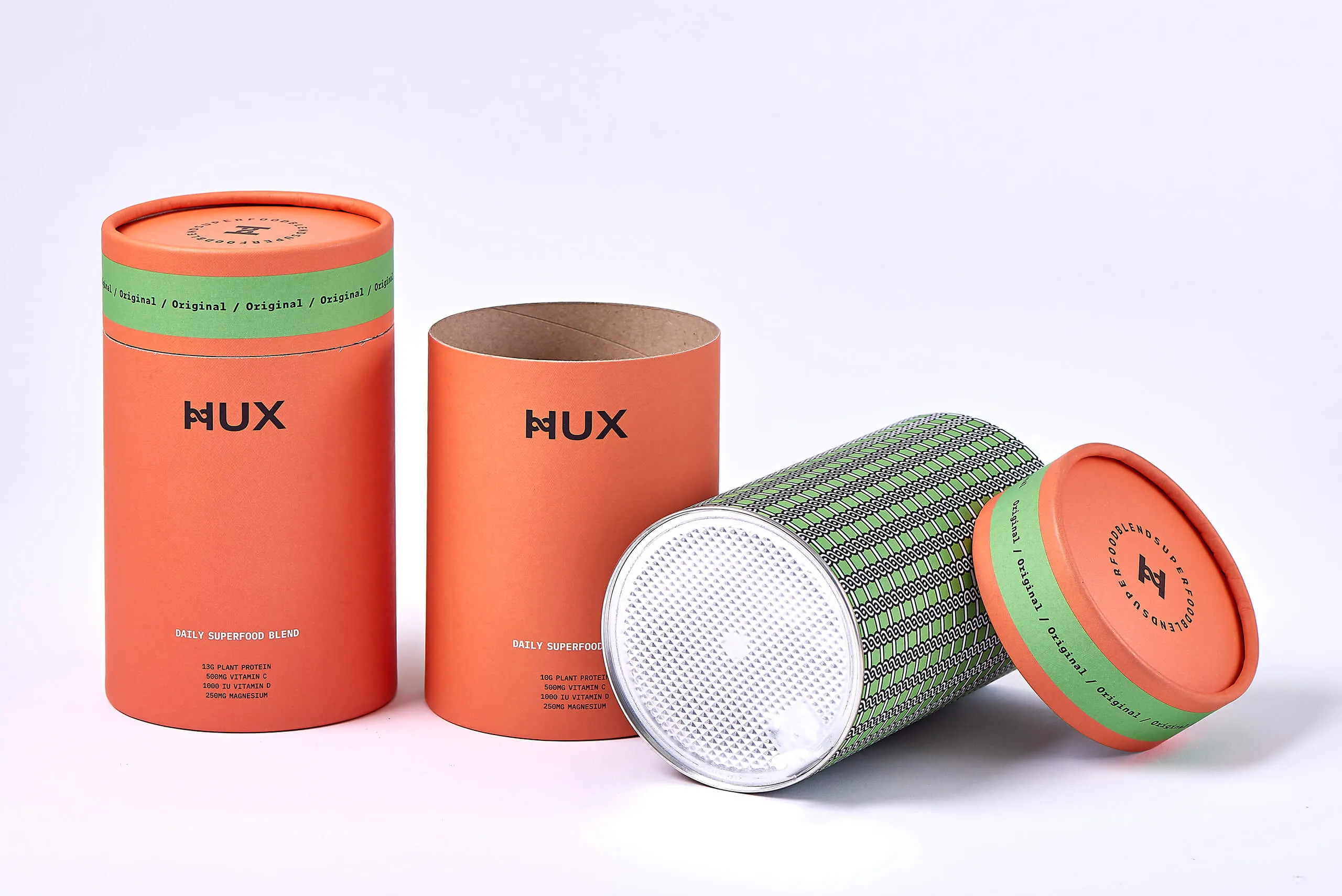
- Aluminum foil lining offers the highest barrier against moisture, oxygen, and light, and is the usual choice for hygroscopic powders, probiotic formulas, and products with long distribution timelines.
- Food-grade barrier liners balance protection with a fully paper-based construction, and suit formats where shelf life demands are moderate.
- Inner bags or pouches inside the tube add a resealable layer and are common for multi-serve powders.
Match the liner to the formula, not to the marketing brief. A dry tablet with a twelve-month stable profile needs far less barrier than a fish oil softgel. The construction details behind these choices — liner materials, seams, and how barrier performance is verified — are covered in more depth in our guide to barrier technology for food-grade paper tubes.

Child-Resistant Options for Supplement Brands
Whether a supplement package needs child-resistant (CR) closure depends on the product, the ingredient, and the destination market — iron-containing products in the United States, for example, fall under PPPA requirements, and several other markets apply comparable expectations. Brands should confirm the regulatory position for their specific formula and markets before choosing a closure, rather than assuming one way or the other.
Where CR performance is needed, paper tubes can be engineered with locking closure systems that require a coordinated push-and-turn or squeeze-and-turn action, tested to the relevant protocol. Two things to verify with the manufacturer: that the CR mechanism is validated on the actual tube dimensions (not a generic design), and that senior-friendly opening has been considered, since a closure children cannot open is a failure if their caregivers cannot either. Our child-resistant paper tubes are built for exactly this balance, and the closure options can be matched to the product's regulatory requirements.
Sizing Paper Tubes Around Dose Count and Format
Supplement tubes are sized from the inside out: the dose format determines the internal volume, and the internal volume determines the diameter and height.
- Capsules and tablets are counted into the tube, so the internal diameter must fit the widest tablet plus clearance, and the height must hold the count with room for the closure.
- Powders are filled by weight, so the tube works as a single-serve or multi-serve container, and a resealable liner matters more as the number of servings grows.
- Gummies need width so pieces do not bridge and jam, plus a liner with low moisture transfer, since gummies are the format most sensitive to texture change.
Two sizing mistakes are worth avoiding: a diameter so tight that filling slows down on the production line, and a height chosen for shelf presence rather than content, which leaves visible headspace the customer reads as an empty package. Working from the actual product — samples of the capsules or powder, not just the specification sheet — prevents both. Our vitamins and supplements tubes come in a range of diameter and height combinations sized around common dose formats.
Compliance and Labeling: What the Package Must Carry
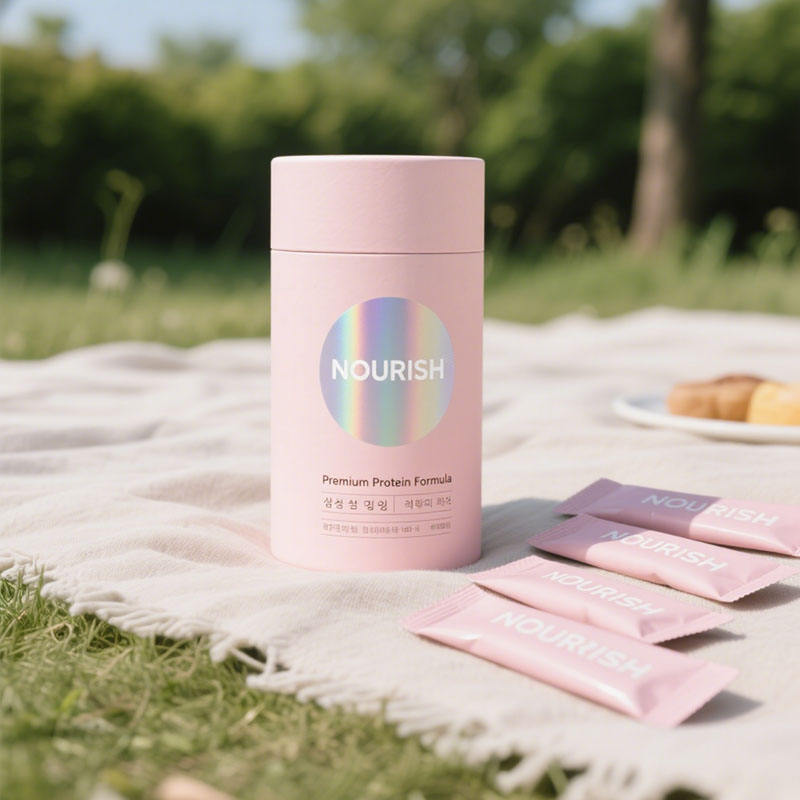
Labeling is where supplement packaging differs most from general consumer goods. Depending on the market, the package may need to carry a supplement facts panel, full ingredient listing, net quantity, batch or lot code, expiry date, and manufacturer or distributor identity. The label area on a tube is a wrapped rectangle, so the design needs a planned panel layout rather than free-form artwork.
Three practical points for wellness brands: plan the mandatory panel early, because retrofitting compliance information into finished artwork is the most common cause of print delays; keep the batch code area unobstructed so coding equipment can apply it cleanly; and confirm which claims are permitted in the destination market before they are printed. Regulatory advice should come from your compliance team or consultant — the manufacturer's job is to make sure the package can carry what the rules require, legibly and in the right place. Material and production standards relevant to this category are listed on our certifications page.
Printing and Branding for the Wellness Shelf
Wellness brands tend to compete on clarity as much as color. Shoppers scan for the active ingredient, the dose format, and a reason to trust the source, so the strongest tube designs put the product benefit at eye level, keep the ingredient story readable, and use finish choices sparingly. A matte surface with a single foiled logo reads as considered; layered effects competing with the supplement facts panel read as clutter.
For brands planning a product line rather than a single SKU, a consistent tube structure with per-product color coding makes the range readable on shelf and simplifies reorders. The design mechanics — hierarchy, color system, and print method selection — are covered in our guide to designing custom paper tube packaging.
What to Confirm Before Ordering Supplement Tubes
| Item | What to Confirm |
|---|---|
| Formula profile | Dose format, moisture sensitivity, and target shelf life shared with the manufacturer |
| Liner selection | Aluminum or barrier liner matched to the formula, with food-contact documentation |
| Closure type | Standard or child-resistant, validated on the actual tube dimensions |
| Internal sizing | Diameter and height tested against the real product count or fill weight |
| Label panel | Supplement facts panel, ingredient list, batch code, and barcode areas planned in artwork |
| Sample approval | Structural and printed samples approved before production, including closure action |
| Budget basis | Liner, closure, and finishing costs confirmed as part of an itemized quote |
Liner and closure choices move cost more than most brands expect at the briefing stage, so it is worth building the budget from an itemized quote rather than a headline unit price. Our guide to what custom paper tubes cost explains how each element contributes to the final figure.
Frequently Asked Questions
Are paper tubes suitable for supplement packaging?
Yes, when they are engineered for the category: a barrier or foil liner matched to the formula's sensitivity, a closure that reseals reliably, and internal dimensions sized to the actual dose format. The tube's rigid wound construction protects tablets and capsules well through distribution, which is why supplement brands increasingly use them for powders, capsules, and gummies.
Can paper tubes be made child-resistant?
Yes. Child-resistant closures can be engineered into the tube structure with a push-and-turn or similar locking action, validated against the relevant test protocol. Brands should confirm their formula's regulatory requirements for each market first, then have the CR mechanism tested on the actual tube dimensions rather than assumed from a generic design.
What liner should I choose for protein powder or capsules?
Hygroscopic powders generally need aluminum-lined construction for moisture and oxygen control, especially for long shelf life targets. Dry, stable capsules and tablets may perform well in a food-grade barrier liner. Share the formula profile and shelf life target with the manufacturer and let the liner follow the requirement instead of the other way around.
How many capsules fit in a paper tube?
Capacity depends on capsule size and the tube's internal diameter and height. A practical approach is to share the capsule dimensions and target count with the manufacturer, who can size the tube and confirm fill behavior. Sizing from the real product prevents both a too-tight fill and visible headspace.
Can supplement labels and batch codes be printed on paper tubes?
Yes. The wrapped label surface supports a planned compliance panel — supplement facts, ingredients, net quantity, and brand identity — and batch codes are typically applied in a dedicated unobstructed area so coding equipment can print cleanly. Plan the mandatory panel into the artwork early to avoid print delays.
How long do supplements last in paper tube packaging?
Shelf life depends on the formula, the liner, and the closure, not the tube format alone. An aluminum-lined tube with a well-fitted closure provides a high-barrier environment comparable to other rigid formats for most dry supplement forms. Validate shelf life with your own stability testing on the final package, as packaging suppliers can support the barrier data but the stability claim belongs to the brand.
Bringing the Decision Together
For wellness brands, paper tube packaging works when three decisions are made together: a liner matched to the formula's sensitivity, a closure that meets both the regulatory and the user-experience requirement, and internal dimensions sized from the real product rather than the shelf mockup. Get those three right and the tube delivers what the category needs — structural protection, shelf differentiation, and a package that carries the compliance story cleanly.
None of these decisions is expensive to change on paper, and all of them are expensive to change after production. That asymmetry is why the sample stage matters so much in this category: it is the last point where the liner, the closure action, and the internal fit can be tested together before the brand commits to volume.
The most efficient path is to involve the manufacturer while the formula and dose format are still being finalized. Sharing the product early turns sizing, liner selection, and closure validation into a short technical conversation instead of a late-stage redesign. For brands comparing packaging structures more broadly, our overview of paper canisters versus traditional rigid boxes shows how cylindrical formats compare on protection, cost, and shelf impact.
Planning Supplement Packaging for Your Next Launch?
Share your formula profile, dose format, and target markets with our packaging team. We will recommend the liner and closure combination, confirm sizing against your product, and provide samples and documentation before production.