
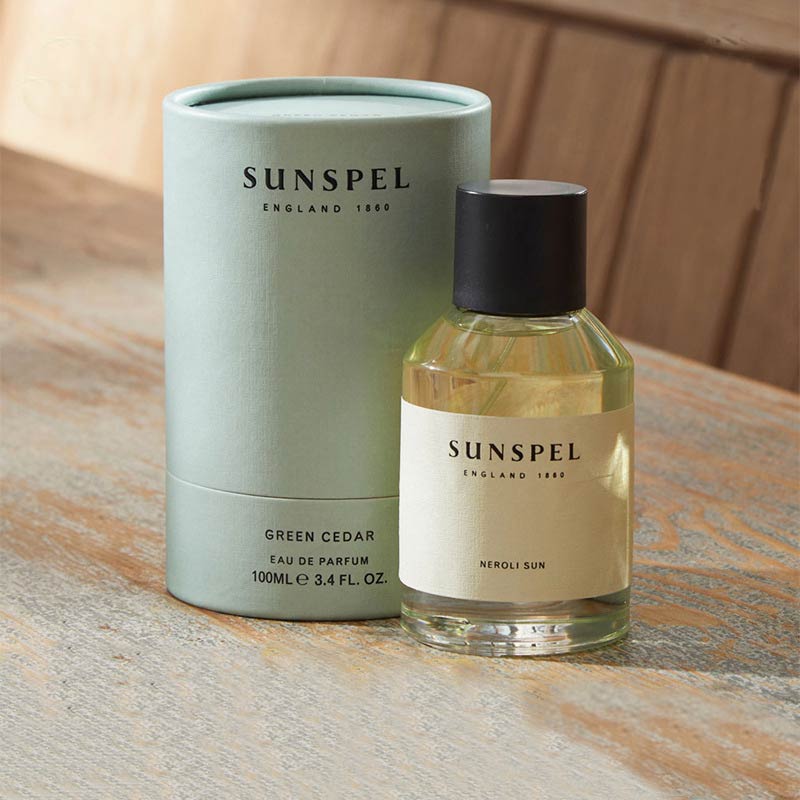
A perfume bottle is a demanding object to package. Glass is heavy and unforgiving, the liquid inside reacts to light and temperature, and the outer package carries a disproportionate share of the first impression. Customers form an opinion about a fragrance long before they smell it, and what they hold sets that expectation.
Paper tube packaging suits fragrance well, but only when the tube is designed around the actual bottle rather than a rendering of it. This guide covers both halves of that work: the design decisions that shape what the customer sees, and the protection decisions that decide whether the bottle arrives intact.
Why Fragrance Packaging Has Different Priorities
Fragrance overlaps with cosmetics, but a heavy glass primary package, an alcohol-based formula, and a high unit value shift the priorities.
- Weight in a fragile container. A 50 ml or 100 ml flacon is dense, and its mass sits in a small footprint that has to be held still through handling and parcel sorting.
- High value per unit. A damaged bottle costs the bottle, the juice, the labor, and the lane on a retail order.
- A short window at the shelf. In a crowded category, the outer package is often the only thing a shopper reads before deciding to pick the product up.
- Parcel-based distribution. Pallet shipping is gentle compared with e-commerce, where a single bottle may travel loose in a mailer.
One clarification is worth making early. The bottle is the primary barrier; a paper tube does not replace a sealed glass container and should never be presented as doing so. Its protection role is secondary but real: it limits light exposure, buffers temperature swings in transit, absorbs handling shock, and keeps the bottle from shifting inside its own package.
Start With the Bottle, Not the Artwork
The most common cause of a late redesign is a tube dimensioned from a drawing rather than a physical bottle. Molded glass varies, atomizers add height, and caps overhang more than a spec sheet implies. Measure from a production sample:
- Body diameter at the widest point, which may be the shoulder rather than the base
- Neck diameter, if the insert will support the bottle at the neck
- Overall height with the cap or atomizer fitted, and filled weight
- Cap overhang, since a wide cap changes the insert geometry
Two clearances then have to be balanced. A tube that is too tight makes assembly slow and risks scuffing during insertion. One that is too loose lets the bottle shift, transferring shock to the glass. The practical answer is a controlled fit in which the insert, not the tube wall, holds the bottle. Sending a physical bottle to the manufacturer settles this in one step. Our guide on how to design custom paper tube packaging covers the wider design sequence.
Choosing a Tube Structure for Perfume
Single-Piece Tubes
A one-piece tube pairs a body with a fitted cap of the same diameter, so the printed surface reads as one continuous cylinder. It is the cleanest option for full-wrap artwork, but the cap diameter is fixed to the body.
Telescopic Two-Piece Tubes
An inner body and an outer sleeve that slides over it. The friction fit controls the opening feel, and the overlap lets the sleeve carry a different color or finish. See the telescopic two-piece paper tube specification for diameter and wall combinations.
Butt-Joint Three-Piece Tubes
A shoulder section lets the cap and body differ in diameter, joined with a clean edge. This comes closest to traditional carton proportions, but artwork has to register across three components.
| Structure | Best Fit | Points to Plan For |
|---|---|---|
| Single-piece | Single bottles, full-wrap artwork, cost-sensitive runs | Cap diameter fixed to body; opening feel depends on fit tolerance |
| Telescopic | Gift sets, limited editions, two-tone designs | Overlap length sets opening friction; parts print separately |
| Butt-joint | Wide body with a narrower cap | Artwork must register across three components |
Formats, sizes, and decoration for this category are set out on our perfume tubes page.
Inserts and Cradles: What Actually Protects the Bottle
When a fragrance bottle breaks in transit, the failure is almost never the tube wall. It is the insert, which converts a rigid cylinder into a package that can survive a drop.
- Die-cut foam. EVA or PE foam holds the bottle firmly and absorbs shock, giving the most positive retention at a higher unit cost.
- Molded pulp. A paper-based cradle formed to the bottle profile. Single-material and paper-forward, though tooling only pays off at volume.
- Paperboard collars. Folded board gripping the shoulder and supporting the base: lightweight and printable, with less retention than foam.
- Corrugated cradles. For heavier bottles and multi-bottle sets needing a two-piece base and lid.
Three questions decide whether an insert works. Where does it contact the bottle: base, shoulder, or neck? Supporting shoulder and base together limits rotation, while a base-only cradle lets a tall bottle rock. Can the bottle move when the package is shaken? Even a few millimeters of shift means the glass absorbs impacts it should not. And does it survive repeated insertion, which matters for refillables the customer reseats.
Validation matters more than specification. A drop test from the height the product will actually see, plus a vibration run simulating parcel handling, tells you more than any datasheet. Our article on paper tubes for product protection, branding, and sustainability covers how these decisions interact with the rest of the package.
Wall Thickness and the Real Distribution Channel
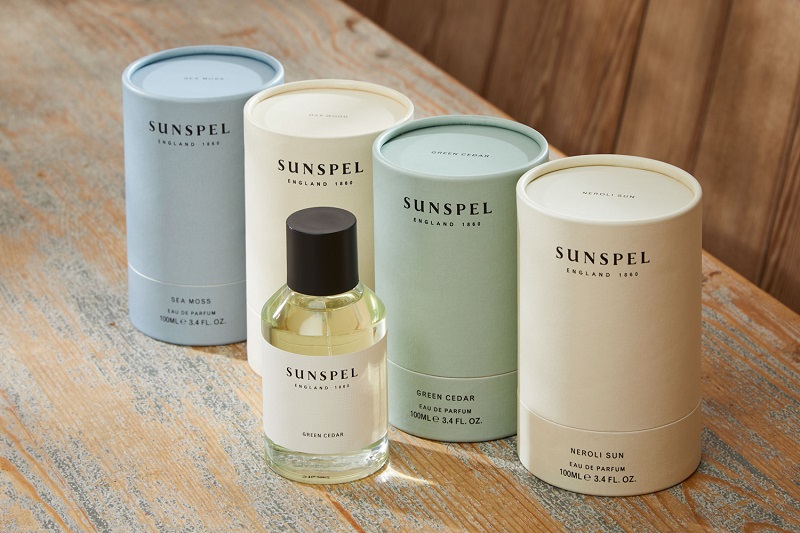
Wall thickness affects crush resistance, the weight of the package in the hand, and the impression when a customer picks it up. The right thickness depends on the load case rather than a universal number: filled weight, whether the insert or the wall carries it, stack height in the outer carton, and diameter, since a larger wall resists bending less effectively at the same thickness. Prototyping at two levels and testing both is more reliable than choosing on assumption.
Closures and the Opening Ritual
Opening the package is part of the product experience in fragrance. The closure decides whether that moment feels considered or clumsy, and whether the package survives shipping intact. Common options are a paperboard cap seated on the body, a metal cap, and a ribbon pull for sliding formats.
Each has a characteristic failure mode. Too tight damages the tube in the customer's hands and slows packing lines. Too loose lets the cap separate in transit, exposing the bottle. Inconsistent friction, where some units open smoothly and others stick, reads as a quality problem even when nothing is defective. For retail channels, design tamper evidence as a separate element rather than assuming the fit provides it.
Design Decisions That Communicate Fragrance Before It Is Opened
The product cannot be experienced through the package, so everything a customer learns in the first few seconds comes from color, typography, texture, and form. That makes hierarchy more important than decoration. A workable order reads brand, then fragrance name, then concentration and volume, then supporting information. When all of these compete at the same visual weight, attention moves on.
On color, fragrance families have conventions rather than rules. Warmer hues and darker neutrals appear often in heavier orientals, pale palettes in fresh launches. These are conventions shoppers recognize, not psychological certainties. Contrast and consistency matter more: text has to stay legible, and a house with several fragrances needs a color system that identifies each one while making the family relationship obvious.
Plan the required information early as well. Concentration, net volume, batch code area, and country of origin are routinely forgotten until the print is approved, and adding them afterwards means new plates. Our look at custom paper tubes for cosmetic packaging covers aligning fragrance with a wider beauty line.
Printing and Finishing Considerations
Printing choice follows quantity, artwork, and color requirements. Offset delivers fine detail and consistent solids at volume; digital handles shorter runs and versioned designs, which suits limited editions and regional variants sharing one structure.
On a cylindrical surface, artwork behaves differently than on a flat carton. A full-wrap design has no natural front or back, so the layout has to work from any angle. Long horizontal rules and gradient bands look straight on a flat proof and can appear to curve once wrapped, which is why a printed prototype matters here more than in most categories.
Finishing in fragrance tends toward restraint. Soft-touch and matte laminates give the understated surface that reads as expensive in this category, while gloss works as a single accent against a matte base. Foil stamping is most effective on a brand mark rather than a large field, and embossing adds tactile depth. Two techniques usually outperform four, because every effect adds a registration point and another way for a run to drift. Our luxury paper tube packaging guide examines how premium brands build that impression.
Gift Sets, Discovery Kits, and Travel Retail
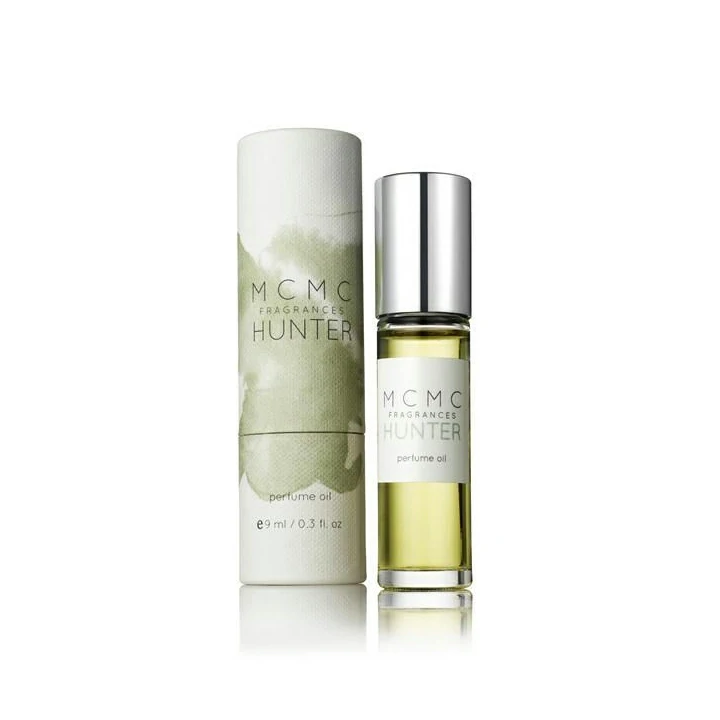
Multi-item configurations change the engineering more than the design. A discovery set of four or five vials needs internal dividers that keep components separated and survive one being removed without disturbing the rest. The usual mistake is sizing the tube from the outer carton rather than from the actual array of components plus divider thickness.
Travel retail adds further handling: a tube sold in an airport store may be carried in hand luggage or packed into a suitcase, and it has to look presentable on arrival. These formats benefit from more positive retention and a closure that will not release under repeated handling.
Common Mistakes in Perfume Tube Packaging
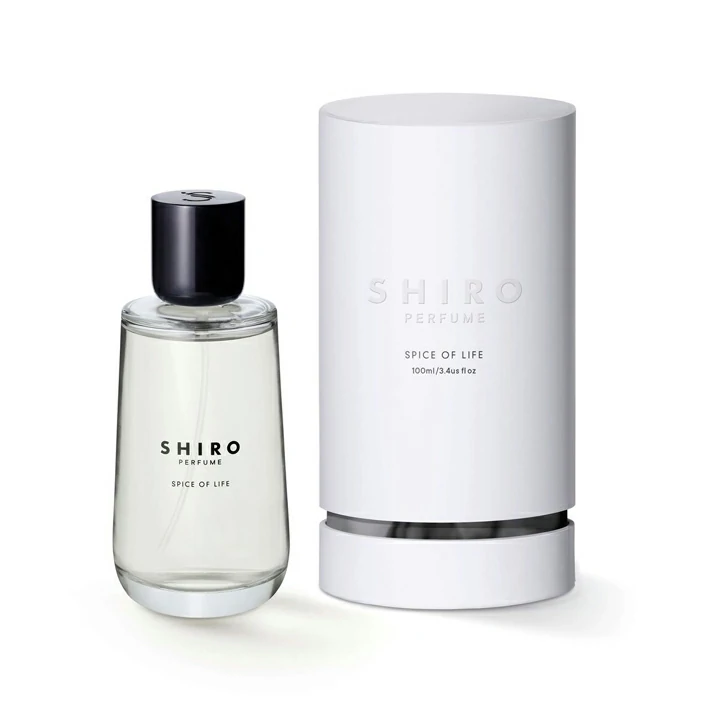
- Dimensioning from a drawing, not a bottle. Atomizer height and cap overhang are most often wrong.
- Treating the tube as the protection. Without a validated insert, it contains the bottle but does not protect it.
- Undersizing the wall for heavy glass. A thin wall on a 100 ml bottle is where compression failures appear.
- Forgetting insert thickness. Internal diameter must hold the bottle plus what holds the bottle.
- Over-decorating. Foil, embossing, spot UV, and a window on a 45 mm tube produce noise, not luxury.
- Leaving batch code space to the last minute. Adding it after print approval resets the schedule.
From Concept to Production: A Practical Sequence
| Step | Action | What It Resolves |
|---|---|---|
| 1 | Send physical bottle samples | Removes dimension guesswork before tooling |
| 2 | Confirm inner dimensions and insert type | Balances bottle fit against protection |
| 3 | Select structure, closure, material, and wall thickness | Defines opening feel, strength, and internal space |
| 4 | Lay out artwork and select printing and finishing | Prevents wrap distortion; matches process to quantity |
| 5 | Build a prototype with the bottle inside | Reveals fit, opening feel, and tactile impression together |
| 6 | Run drop and vibration tests | Validates insert and wall against the real channel |
| 7 | Approve the sample and freeze specifications | Locks the sample production is measured against |
Cost expectations are worth setting at step 2 rather than step 8, since the parameters that move price are established by then. Our complete pricing guide for custom paper tubes breaks down how structure, material, print, and finishing each contribute to unit cost.
What to Confirm Before Placing an Order
| Item | What to Confirm |
|---|---|
| Bottle and weight | Measured from a physical sample with cap and atomizer, plus filled unit weight |
| Insert design | Contact points, retention, and behavior after repeated removal |
| Tube structure | Single-piece, telescopic, or butt-joint, with the opening sequence agreed |
| Sizes and wall thickness | Internal sizes reconciled with the insert, external with the shipper |
| Closure and opening feel | Friction range defined; tamper evidence addressed if needed |
| Material and finish | Board specification plus laminate, foil, or emboss selection |
| Artwork and labeling | Dieline-accurate layout, color standard, net volume and batch code area |
| Testing and approval | Drop and vibration results reviewed; signed sample held by both parties |
| Quantity and schedule | Order quantity, staged delivery if needed, and the launch date |
Frequently Asked Questions
Can paper tubes be used for perfume packaging?
Yes. Paper tubes are commonly used as the outer package for fragrance bottles, usually with an insert that holds the bottle in place. The tube provides presentation and secondary protection.
How do I keep the bottle from moving inside the tube?
Build the fit around an insert rather than the tube wall. Die-cut foam, molded pulp, or a paperboard cradle at base and shoulder holds the bottle positively. Validate with a shake check and a drop test.
Does the paper tube protect the fragrance from light and temperature?
It contributes to both. An opaque tube limits light reaching the bottle and slows how quickly the contents respond to ambient temperature swings. It does not make the package temperature-controlled.
What tube structure works best for perfume gift sets?
Telescopic two-piece tubes are common because the sliding action reads as deliberate and the sleeve and body can carry different treatments. Multi-bottle sets also need internal dividers.
What printing and finishing options suit perfume packaging?
Offset printing for detailed artwork and consistent solids at volume, digital for shorter runs and versioned editions. A matte or soft-touch surface with one accent such as foil stamping reads better than layering several effects on a small surface.
Should I send a physical bottle before ordering?
Yes, and as early as possible. Molded glass varies, atomizers add height that drawings omit, and caps overhang unpredictably. A sample lets the manufacturer confirm inner dimensions and insert geometry in one pass. Our guide to choosing a reliable custom paper tube manufacturer covers what to evaluate in a supplier.
Design and Protection Have to Be Decided Together
A fragrance tube succeeds when it holds a heavy glass bottle still, opens the way the brand intends, and communicates the product before the cap comes off. Those outcomes come from one set of decisions: dimensions taken from a real bottle, an insert that carries the load, a wall thickness matched to the channel, a closure with a defined friction range, and artwork laid out for a surface with no front or back.
Well-designed packaging does not sell a fragrance on its own. What it does is remove the reasons a customer might put the product down, and reduce the number of bottles that never reach the shelf.
Planning Perfume Packaging for Your Next Launch?
Send us your bottle sample and target channel. Our packaging team will confirm inner dimensions, recommend an insert and structure, and provide a printed prototype with the bottle fitted before production begins.