
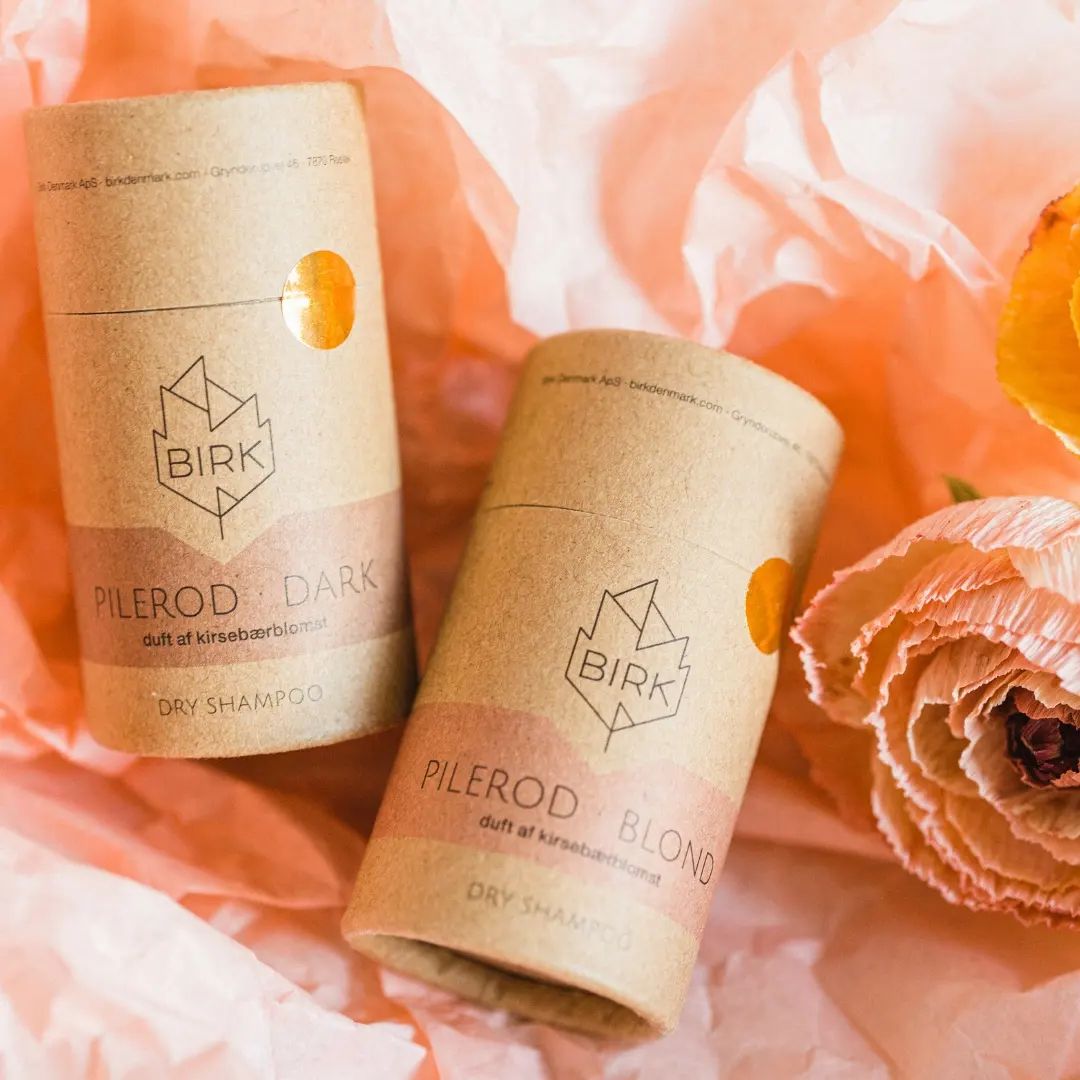
More brands are choosing custom paper tube packaging for its sustainability, premium presentation, and plastic-free composition. But when packaging buyers start comparing suppliers, they often find that pricing varies significantly — and not always for obvious reasons.
The final cost of custom paper tubes depends on materials, dimensions, customization level, surface finishing, order quantity, and production requirements. Understanding how each of these factors influences pricing helps buyers make informed decisions and avoid unexpected costs after production begins.
This guide breaks down every factor that affects custom paper tube cost so your team can plan packaging budgets accurately, compare suppliers effectively, and get the best value from your investment.
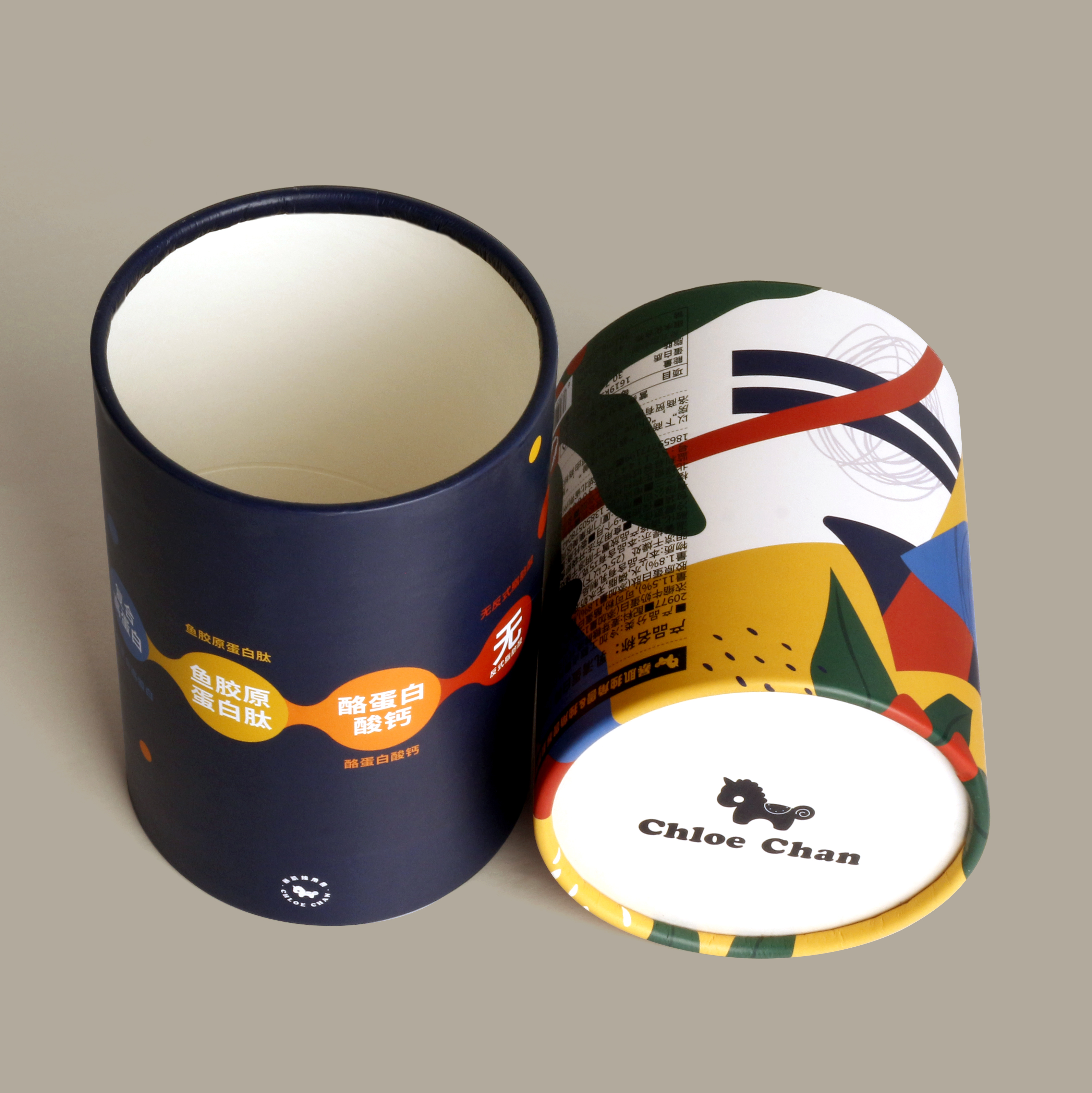
How Much Do Custom Paper Tubes Cost?
There is no single price for custom paper tube packaging — because there is no standard tube. Every order involves different dimensions, materials, printing, finishing, and quantity, all of which shift the unit cost.
What buyers can expect:
- Small orders carry higher unit costs because setup fees (plate creation, machine calibration, proofing) are distributed across fewer units
- Larger quantities reduce the cost per tube as fixed production costs amortize over more units
- Highly customized structures — non-standard diameters, unique closures, multi-layer constructions — require additional production steps that increase both material and labor costs
- Simple, standard tubes with minimal printing are the most cost-effective starting point
The practical approach is not to search for a fixed price online, but to understand the cost drivers and prepare specifications that allow manufacturers to provide accurate quotations.
What Factors Affect Custom Paper Tube Packaging Cost?
Five primary factors determine the cost of custom paper tube packaging. Each one represents a decision point where buyers can optimize for budget, quality, or both.
1. Tube Size and Structure
The physical dimensions and structural design of a paper tube directly affect how much material is consumed and how complex the manufacturing process becomes.
| Size Factor | How It Affects Cost |
|---|---|
| Diameter | Larger diameters consume more paperboard per unit and may require wider winding machines |
| Height | Longer tubes use more material and increase shipping volume per unit |
| Wall thickness | Multi-layer walls add material layers and winding time, raising both material and production costs |
| Closure style | Metal ends, plug lids, push-up bottoms, and child-resistant caps each carry different component costs |
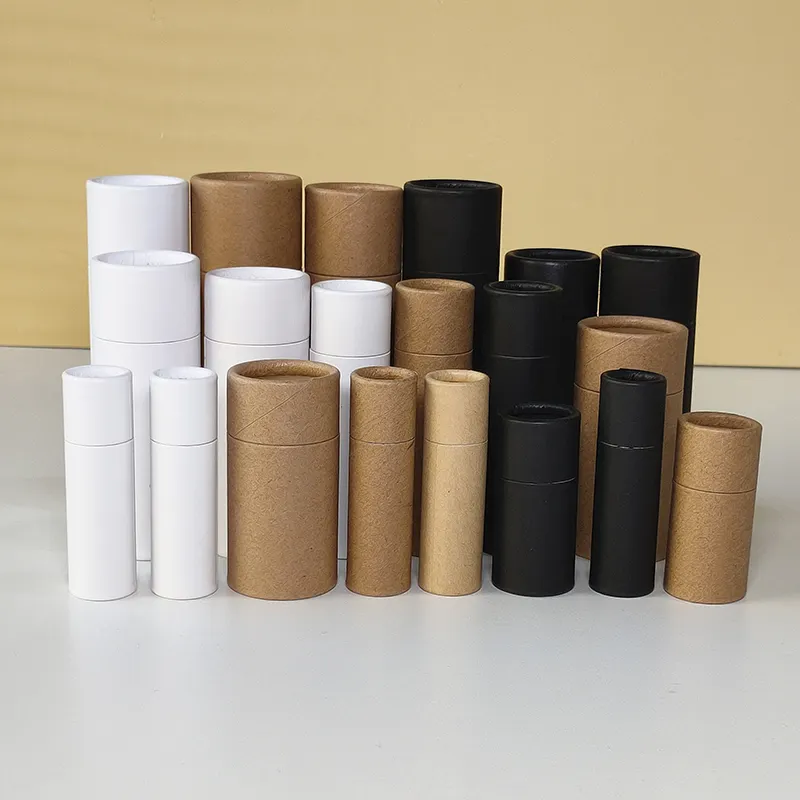
Different product categories need different size profiles. Lip balm tubes are small-diameter, short-height, and low-cost per unit. Coffee tubes are wider, taller, and require one-way valve integration. Tea canisters often need resealable closures. Cosmetic packaging tubes demand precise dimension control for a premium fit. Each of these structural differences shifts the cost baseline.
2. Material Selection
The paperboard and liner materials chosen for a tube affect four things simultaneously: appearance, durability, sustainability credentials, and cost.
| Material Option | Cost Impact | Best For |
|---|---|---|
| Kraft paper | Lower material cost, natural appearance | Eco-focused brands, organic products, natural aesthetic |
| White paperboard | Moderate cost, excellent print surface | Full-color printing, vibrant brand designs |
| Premium specialty paper | Higher cost, unique textures and finishes | Luxury brands, limited editions, distinctive tactile feel |
| Food-grade paper materials | Additional compliance and certification costs | Food, beverage, and supplement packaging |
Food-grade materials require certified liners (aluminum foil, PLA, or food-safe coatings), compliance testing, and documentation — all of which add cost beyond the raw material itself. Brands selling food, tea, coffee, or supplements should plan for these additional requirements in their packaging budget.
3. Printing and Surface Finishing Options
Every printing method and finishing process added to a tube represents an additional production step, material layer, and quality checkpoint — and each one affects the final price.
Printing methods:
- Offset printing — high resolution for detailed designs, requires plate setup costs that amortize at larger quantities
- Digital printing — no plate costs, suitable for short runs and prototyping, but per-unit printing cost may be higher at volume
Surface finishing:
- Matte lamination — adds a subdued, premium feel with moderate cost increase
- Gloss lamination — vibrant surface impact, similar cost range to matte
- Foil stamping — metallic accent application requiring dedicated equipment and setup, higher cost per tube
- Embossing and debossing — tactile texture creation through die-forming, adds tooling cost and per-unit processing
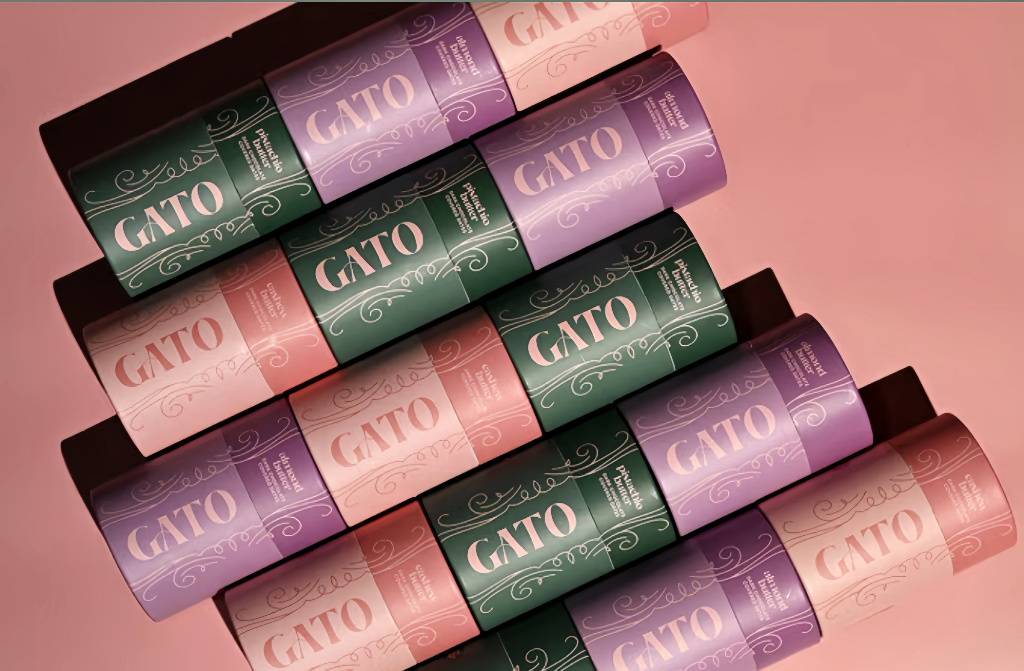
The relationship between finishing complexity and cost is straightforward: each additional process requires its own setup, production pass, and quality verification. A tube with offset printing + matte lamination is one cost tier. A tube with offset printing + matte lamination + foil stamping + embossing occupies a significantly higher tier. The key is to select finishing combinations that deliver the brand impact you need without adding processes that do not contribute to shelf performance.
4. Order Quantity and MOQ
Production volume is one of the most direct cost drivers in custom packaging. The relationship between quantity and unit cost follows a clear pattern:
- Small initial orders — unit cost is highest because machine setup, plate creation, proofing, and calibration costs spread across fewer tubes
- Medium orders — unit cost drops noticeably as fixed costs distribute across more units
- Large bulk orders — the lowest unit cost tier, where production efficiency is maximized and material purchasing benefits from volume pricing
MOQ (minimum order quantity) depends on several factors:
- Material selection — specialty or food-grade materials may require dedicated production runs with higher minimums
- Printing method — offset printing needs plate setup that only becomes cost-efficient at certain quantities; digital printing allows lower MOQs
- Customization requirements — complex finishing combinations typically require higher minimums to justify tooling and setup investment
Brands testing a new package design should consider starting with digital printing on standard sizes to keep initial investment manageable, then transitioning to offset production at scale.
5. Design Complexity and Custom Features
The gap between basic and premium custom packaging is where the most significant cost differences appear.
| Packaging Level | Typical Features | Cost Implication |
|---|---|---|
| Basic packaging | Standard tube structure, simple one-color or two-color printing, single lamination | Lowest cost tier, efficient production, fast turnaround |
| Mid-range | Custom dimensions, full-color printing, one or two finishing processes | Moderate cost increase, good balance of brand impact and budget |
| Premium packaging | Custom shapes, window cutouts, special inserts, multiple finishing techniques (foil + emboss + UV spot) | Highest cost tier, requires dedicated tooling and multi-pass production |
Advanced customization increases production costs because it requires dedicated tooling (custom dies for embossing, stamping foils for metallic accents), multi-pass production (each finishing process is a separate production step), and additional quality control checkpoints (verifying each process layer). The investment is justified when premium packaging drives measurable brand differentiation, shelf conversion, and consumer willingness to pay.
How to Reduce Custom Paper Tube Packaging Costs
Managing custom paper tube packaging cost does not mean choosing the cheapest option — it means making strategic decisions that deliver the right packaging performance at the best possible price. Here are five practical approaches:
| Cost Reduction Strategy | How It Works |
|---|---|
| Choose standard sizes where possible | Standard diameters and heights avoid custom tooling fees and allow more efficient production scheduling |
| Optimize material selection | Select materials that meet your product requirements without over-specifying — kraft paper often delivers both sustainability and cost efficiency |
| Order larger quantities when feasible | Volume reduces per-unit cost significantly — plan packaging orders to align with production cycles rather than ordering small batches repeatedly |
| Balance finishes with budget | Prioritize one or two high-impact finishing processes over adding every available option — matte lamination alone can deliver premium feel without premium cost |
| Work directly with manufacturers | Direct manufacturer relationships eliminate intermediary margins and give you access to production expertise that helps optimize specifications before production |
The most effective cost reduction happens before production begins — during the specification phase. When buyers provide clear, realistic requirements and discuss options with an experienced manufacturer, the resulting specifications are naturally more cost-efficient than designs created without production input.
Are Custom Paper Tubes More Expensive Than Other Packaging Options?
Cost comparisons between packaging formats need to account for more than unit price — protection performance, brand impact, shelf life, and environmental positioning all factor into the real value equation.
Custom Paper Tubes vs Folding Cartons
Folding cartons are often cheaper per unit, but paper tubes offer structural advantages that can offset the price difference:
- Durable structure — spiral-wound tube walls provide compression resistance and product protection that folding cartons cannot match
- Premium appearance — cylindrical formats create visual differentiation on shelves dominated by rectangular boxes
- Better shelf presentation — tubes stand upright, display full-surface branding, and create a consistent visual block when arranged together
For brands where product protection and premium positioning drive sales, paper tubes deliver value beyond their material cost.
Paper Tubes vs Plastic Packaging
Plastic containers may appear cheaper at first glance, but paper tubes offer strategic advantages that are increasingly valuable in Western markets:
- Sustainable brand image — paper-based packaging aligns with consumer expectations for reduced plastic use, strengthening brand positioning
- Recyclable materials — paper tubes are accepted in standard paper recycling streams in most markets, unlike many plastic containers
- Reduced plastic usage — eliminating plastic from your packaging supports compliance with emerging regulations (EU Packaging and Packaging Waste Regulation, single-use plastic directives) and avoids potential future tax liabilities on plastic packaging
The cost gap between paper tubes and plastic narrows further when accounting for regulatory compliance costs, plastic packaging taxes in certain EU member states, and the brand value of sustainability positioning in consumer purchase decisions.
What Information Do Manufacturers Need to Provide an Accurate Quote?
The accuracy of a quotation depends on the completeness of the information you provide. Preparing these details before contacting a custom paper tube supplier reduces back-and-forth communication and delivers more realistic pricing from the start.
| Information Needed | Why It Affects Pricing |
|---|---|
| Product dimensions | Determines tube size, wall thickness, and closure type — the foundation of material cost |
| Required quantity | Directly affects unit cost through volume pricing and production efficiency |
| Packaging application | Food, cosmetics, supplements, or gifts each require different materials and compliance levels |
| Printing requirements | Number of colors, printing method, and design complexity affect production setup and per-unit cost |
| Material preferences | Kraft, white board, specialty, or food-grade materials each carry different price points |
| Finishing options | Each finishing process is an additional production step with its own setup and per-unit cost |
| Delivery requirements | Timeline, destination, and shipping volume affect logistics costs and production scheduling |
Providing complete specifications upfront also signals to the manufacturer that you are a serious buyer — which often results in more responsive communication, better pricing, and faster quotation turnaround.
Frequently Asked Questions
Q1: How much do custom paper tubes cost?
There is no fixed price because every custom order involves unique specifications. Cost depends on tube size, material selection, printing and finishing complexity, order quantity, and compliance requirements. The most accurate approach is to prepare your specifications and request a detailed quotation from an experienced manufacturer.
Q2: What factors influence custom paper tube pricing?
Five primary factors: tube size and structure (diameter, height, wall thickness, closure style), material selection (kraft, white board, specialty, food-grade), printing and finishing (offset/digital, matte/gloss/foil/emboss), order quantity and MOQ, and design complexity (standard vs custom features). Each factor represents a decision point where specifications can be optimized for cost efficiency.
Q3: Are custom paper tubes expensive compared with other packaging?
Custom paper tubes cost more per unit than basic folding cartons but less than many rigid plastic containers when accounting for regulatory compliance. The value comparison should include product protection, brand presentation, shelf differentiation, and sustainability positioning — not just unit price.
Q4: What is the MOQ for custom paper tubes?
MOQs vary based on material selection, printing method, and customization level. Digital printing enables lower MOQs for initial orders. Offset printing requires higher minimums for cost efficiency. A flexible manufacturer offers scalable options across different quantity tiers.
Q5: How can I reduce custom paper tube packaging costs?
Use standard sizes where possible, optimize material selection to match product requirements without over-specifying, order larger quantities when production cycles allow, prioritize high-impact finishing over adding every available process, and work directly with an experienced manufacturer who can recommend cost-efficient specifications before production begins.
Need a Accurate Quote for Custom Paper Tube Packaging?
EarthyCores provides custom paper tube packaging with transparent pricing, full customization, and certified materials. Share your specifications with our team and receive a detailed quotation tailored to your packaging requirements.